
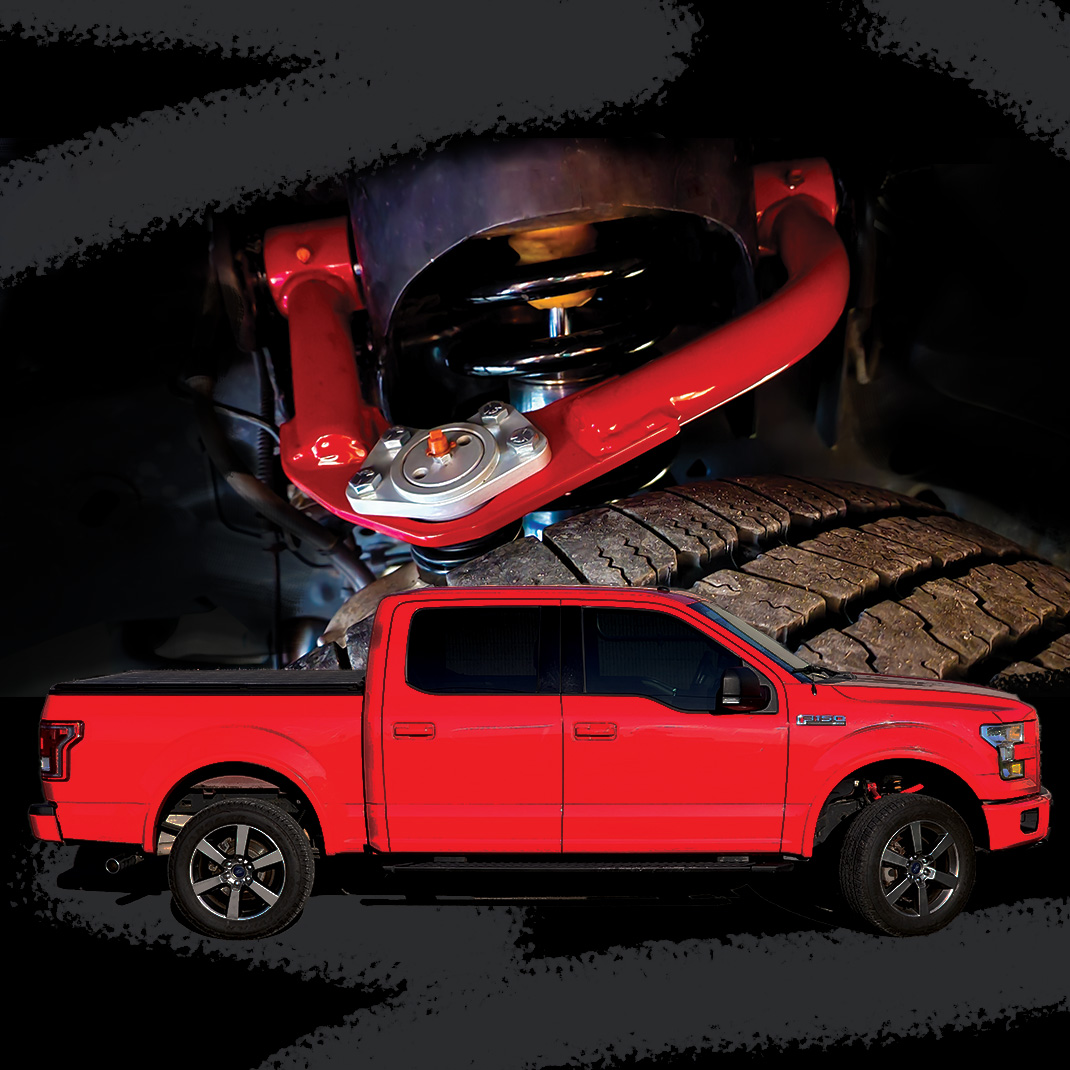
At a glance, a stock upper control arm and an aftermarket one might look pretty similar, same general shape, same mounting points, same job on paper. But once you put them side by side, the differences in design, materials, and capability become obvious fast. If you're trying to decide whether to stick with OEM or upgrade, here's an honest breakdown.
The Quick Comparison
|
Feature |
OEM/Stock UCA |
Aftermarket UCA |
|
Joint type |
Standard ball joint, limited articulation |
Often uniball, significantly more range of motion |
|
Caster adjustability |
Fixed, no adjustment |
Frequently adjustable |
|
Material |
Stamped steel |
Forged, tubular, or chromoly steel |
|
Designed ride height |
Factory stock height only |
Often engineered for a range of lift heights |
|
Durability under load |
Adequate for daily driving |
Built to handle off-road impact and articulation |
|
Price |
Lower upfront cost |
Higher upfront cost, often better long-term value |
Joint Design: Ball Joint vs. Uniball
OEM upper control arms almost universally use a traditional ball joint, a design that works well within a narrow range of motion but starts binding once that range is exceeded, which happens quickly after a lift.
Aftermarket arms frequently switch to a uniball design. Uniballs are mounted in a housing that allows far greater articulation in every direction, so the suspension can move through its full range without the joint fighting it. The tradeoff: uniballs typically need periodic boot inspection and occasional re-greasing, since they're a slightly higher-maintenance design than a sealed OEM ball joint. For most off-road builds, that small maintenance tradeoff is well worth the improved performance.
Adjustability: Fixed vs. Correctable Geometry
This is one of the most practical differences for anyone running a lift. OEM UCAs are fixed; there's no way to adjust caster angle if your geometry shifts after a suspension change.
Aftermarket UCAs often include adjustable mounting points or eccentric bushings, letting you dial caster angle back to spec after a lift. This single feature directly impacts:
-
Tire wear, correct caster means even tire wear instead of premature feathering
-
Steering feel, proper caster keeps steering predictable at speed
-
Alignment shops actually being able to align your truck, many shops can't get a lifted truck back into spec without an adjustable arm
Materials: What They're Actually Made Of
OEM arms are stamped steel, a manufacturing process that's fast and inexpensive but limits the shapes and strength characteristics achievable. It's a fine choice for a vehicle that will mostly see pavement.
Aftermarket UCAs commonly use:
-
Tubular chromoly steel: Lightweight relative to its strength, common on performance-oriented arms
-
Forged steel: Extremely strong, often used in heavy-duty applications
-
Boxed steel construction: Adds rigidity and resistance to bending under load
Any of these typically outperforms stamped steel in absorbing impacts and resisting bending under the stresses of off-road use or larger, heavier tires.
Where OEM Still Makes Sense
To be fair to stock parts: if your truck is unmodified, driven primarily on pavement, and you're simply replacing a worn-out UCA, an OEM or OEM-spec replacement arm is a perfectly reasonable, cost-effective choice. There's no need to overbuild a vehicle that isn't being pushed beyond its factory design intent.
The calculation changes the moment you introduce a lift, larger tires, or regular off-road use. At that point, the limitations of the stock design start working against you rather than just sitting there unused.
Where Aftermarket Pulls Ahead
For lifted trucks, off-road builds, or anyone running larger tires, aftermarket UCAs solve problems that OEM arms simply weren't designed to handle:
-
Eliminating binding at increased ride heights
-
Correcting caster angle for proper alignment
-
Holding up to repeated impact and stress on rough terrain
-
Supporting the added leverage and weight of bigger tires and wheels
Making the Call for Your Build
If you're still running stock height and stock tires, OEM-spec arms are fine. If you've lifted your truck, leveled it, or upgraded to larger tires, especially combined with any off-road use, aftermarket UCAs aren't just a nice-to-have. They correct geometry problems your stock arms can't, and they're built to survive the abuse stock arms were never designed for.
JBA Offroad carries aftermarket upper control arms engineered for a wide range of trucks, lift heights, and use cases, built to outperform stock in every category that matters once you've modified your ride.
[Shop aftermarket UCAs] | [Compare options for your build] | [Get fitment help]
Not sure which arm fits your setup? Tell us your lift height and tire size, and we'll point you to the right option.