
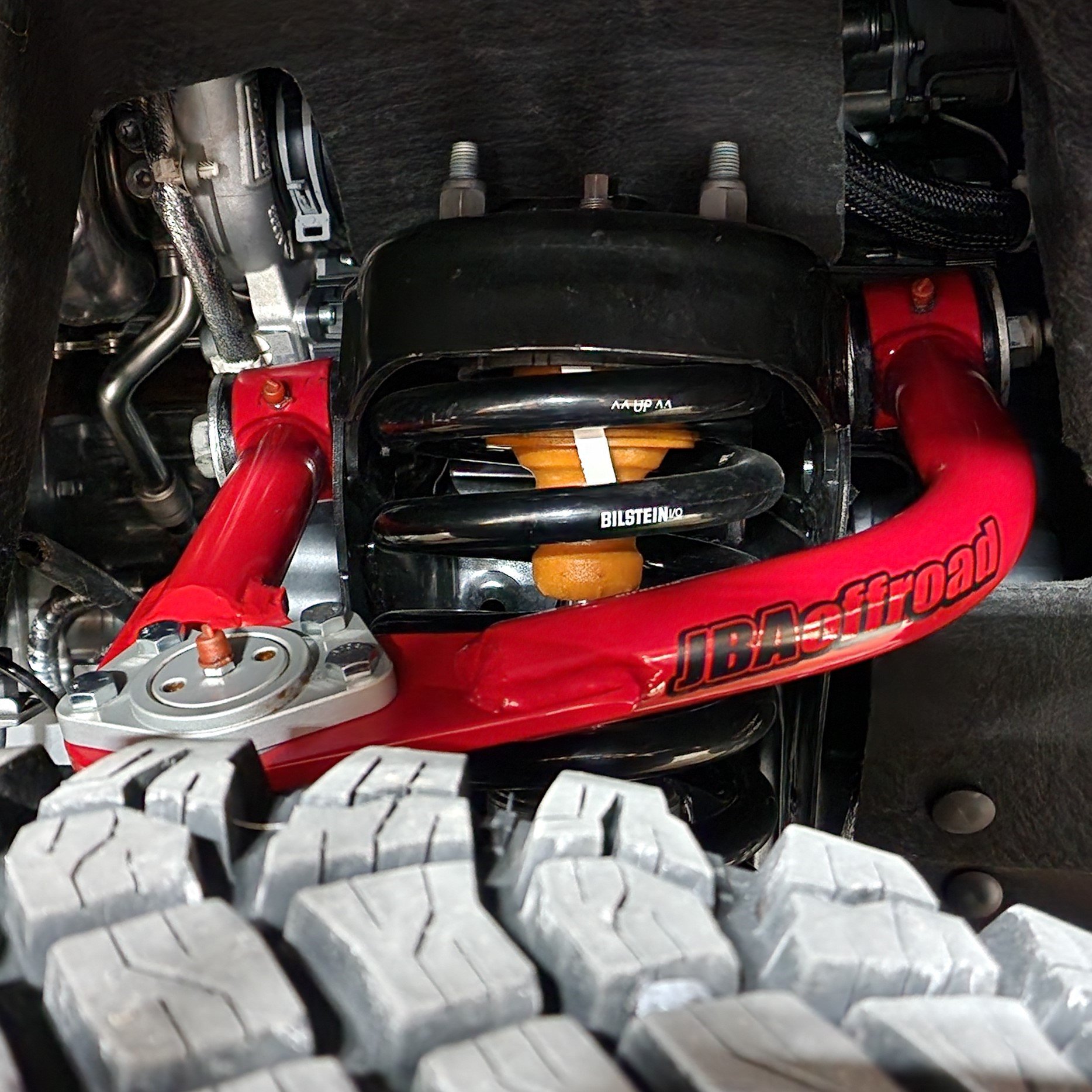
What Is a Control Arm?
A control arm — also called an A-arm — is a suspension link that connects your vehicle's frame to the wheel hub or steering knuckle. It's a hinged part designed to let the wheel move up and down over bumps while keeping it correctly positioned side to side. Most modern trucks and SUVs with independent front suspension (IFS) use two control arms per side: an upper control arm and a lower control arm, stacked one above the other, working together to control wheel movement and maintain proper alignment.
What Does the Lower Control Arm Do?
The lower control arm carries most of the vehicle's weight and absorbs the bulk of the suspension load. It's typically a larger, heavier-duty part than the upper arm, and on most factory-height vehicles, it rarely needs to be replaced unless it's damaged, rusted out, or worn from age. Because lower control arms handle less of the geometry change caused by a lift kit, they're not usually the first — or even second — suspension component most lifted-truck owners need to upgrade.
What Does the Upper Control Arm Do?
The upper control arm plays a smaller structural role but a much bigger one in alignment. It sets the caster and camber angles that determine how your wheel tilts and tracks — the two specs that go out of whack the moment you install a lift or leveling kit. A factory upper control arm is built around factory ride height; raise the truck, and that same arm is now forced into an angle it was never designed for. That's what causes the classic symptoms of a lifted truck with stock upper arms: uneven tire wear, a wandering or heavy steering feel, and suspension travel that's cut short because the arm can't cycle through its full range at the new ride height.
Why Lifted Trucks Almost Always Need an Upper Control Arm Upgrade — Not a Lower One
This is the key distinction: when you lift or level a truck, it's almost always the upper control arm's geometry that breaks — not the lower's. An aftermarket upper control arm is engineered with built-in caster correction and clearance for the new ride height, restoring proper alignment and unlocking the suspension travel your lift kit is supposed to provide. That's why JBA focuses exclusively on upper control arms: it's the part that actually needs to change when you lift a truck. Lower control arms typically stay stock unless they're damaged or you're running an extreme lift height that calls for a full long-arm suspension system.
How to Tell If You Need New Upper Control Arms
A few signs point to worn or mismatched upper control arms:
- You've installed a lift or leveling kit and haven't upgraded the upper control arms yet
- Uneven or accelerated tire wear, especially on the inner or outer edge
- A clunking or knocking noise over bumps
- Reduced or harsh-feeling suspension travel after a lift
- Your alignment shop can't get camber or caster back into spec at your new ride height
If any of these sound familiar, our 7 Signs of a Bad Upper Control Arm guide goes deeper on each symptom, including the 12-and-6 o'clock test you can do yourself with the wheel jacked off the ground.
JBA Upper Control Arms: Built for the Geometry Change
Every JBA upper control arm is engineered with the correct caster and clearance for your specific lift height, machined and welded in-house at our Souderton, Pennsylvania facility. They're built with a field-serviceable Max 90 ball joint and greaseable EZ Lube bushings — no press required, ever — and backed by a lifetime structural warranty. See our cost guide for real pricing on full sets and rebuildable components, shop JBA Upper Control Arms for your vehicle, or read more about how our ball joint compares to uniball-style arms.
Frequently asked questions
Do I need to replace both upper and lower control arms when I lift my truck? Usually not. Most lift and leveling kits only require replacing the upper control arms, since that's the part whose geometry changes when ride height increases. Lower control arms typically stay stock unless they're damaged or you're running a very large lift that requires a full long-arm kit.
Can I just use a lift kit without upgrading my control arms? You can, but you'll likely see faster tire wear, a rougher ride, and reduced suspension travel — because the factory upper control arm's angle is no longer correct for your new ride height. An aftermarket upper control arm restores that geometry.
What's the difference between a control arm and an A-arm? Nothing — they're the same part. "A-arm" is just another name for a control arm, based on its triangular shape.