
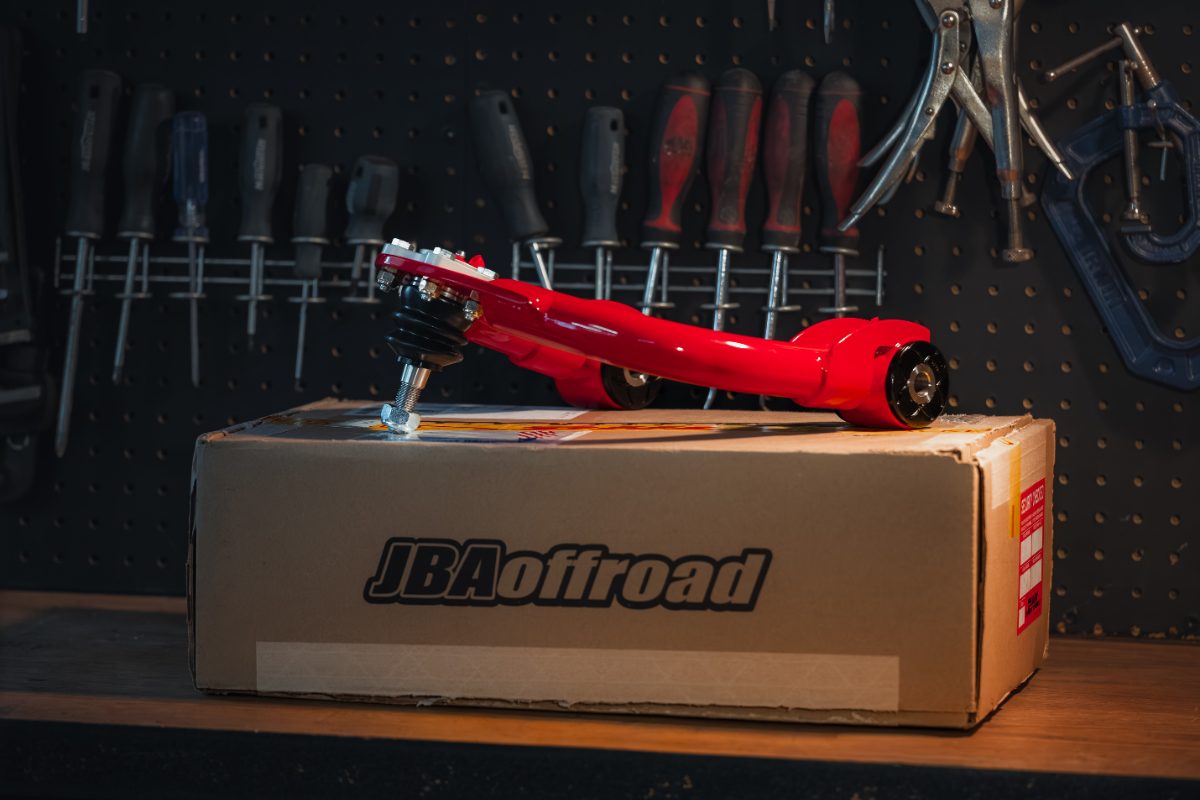
Two red powder-coated upper control arms can look identical the day they come out of the box. The difference shows up a winter or two later. One still looks good. The other has rust creeping out from under a rock chip, or coating flaking off in sheets.
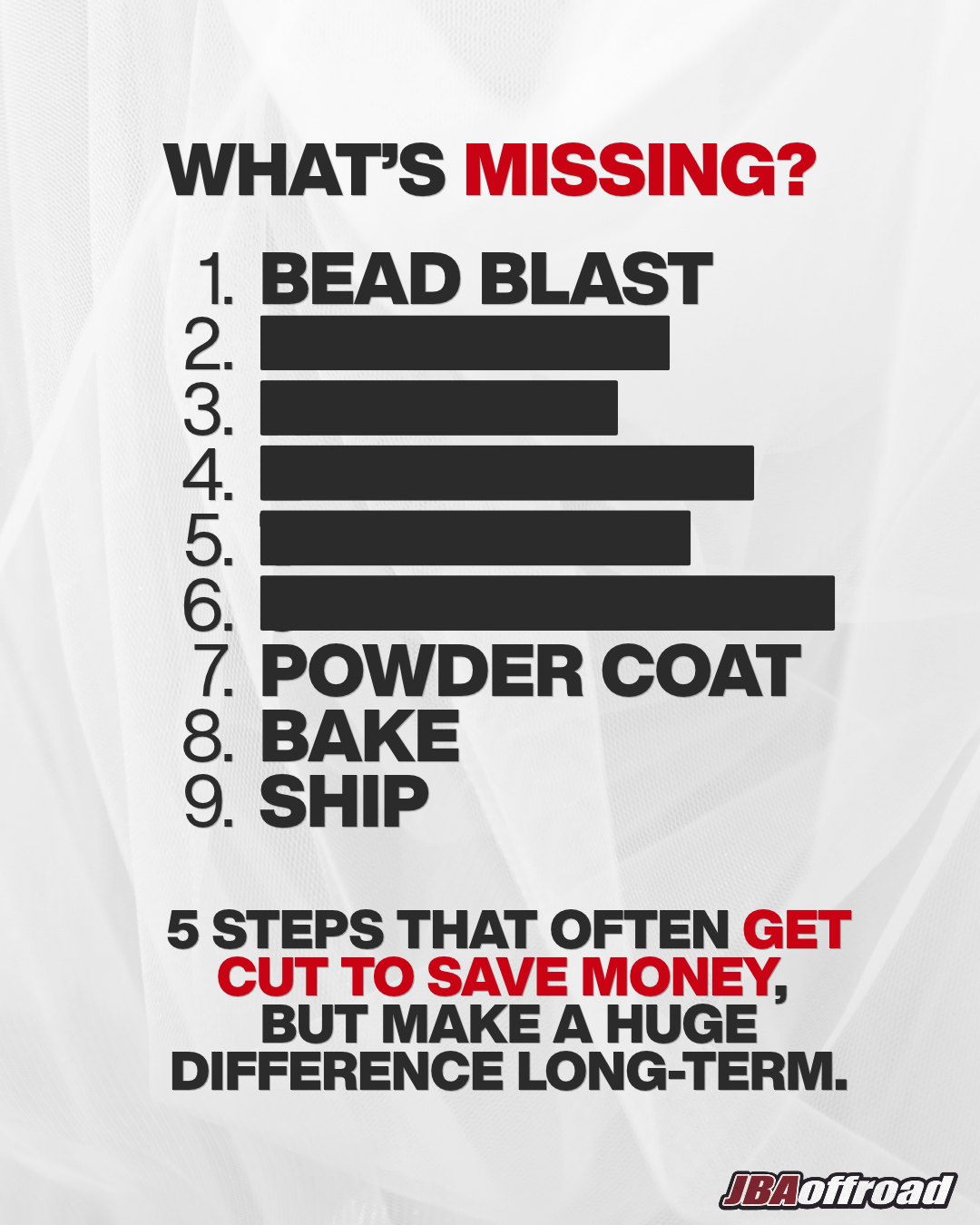
That difference usually comes down to prep, the work done before any powder goes on. A bare-minimum powder coat job is four steps: bead blast, powder coat, bake, ship. Below are the five prep steps that often get cut to save money, what each one does, and why every JBA upper control arm gets all of them.
Why does powder coat prep matter so much on upper control arms?
Upper control arms live in the wheel well, which is about the worst place on a truck for a finish. They take rock and gravel spray, mud, road salt in the winter and pressure washing. Rock chips are going to happen. What matters is what happens after the chip.
When the prep is done right, the coating stays bonded around a chip and rust has a hard time spreading underneath it. When prep gets skipped, moisture works its way under the finish, and the coating starts lifting and bubbling from the inside. You can't see good prep on a new part, but you'll see the lack of it later.
Bare-minimum powder coat vs. JBA's process
| Step | Bare-minimum job | Every JBA arm |
|---|---|---|
| Inspect and bead blast | Bead blast only | Yes |
| Alkaline clean and flush | Skipped | Yes |
| Iron phosphate and two rinses | Skipped | Yes |
| Reverse osmosis rinse | Skipped | Yes |
| Final rust sealer | Skipped | Yes |
| Zinc-rich epoxy primer | Skipped | Yes |
| Powder coat | Yes | Tiger Drylac Bengal Red |
| Bake | Yes | Cured at 400°F |
| Final visual inspection | Not always | Yes |
Skipped step 1: Why does steel need an alkaline clean before powder coating?
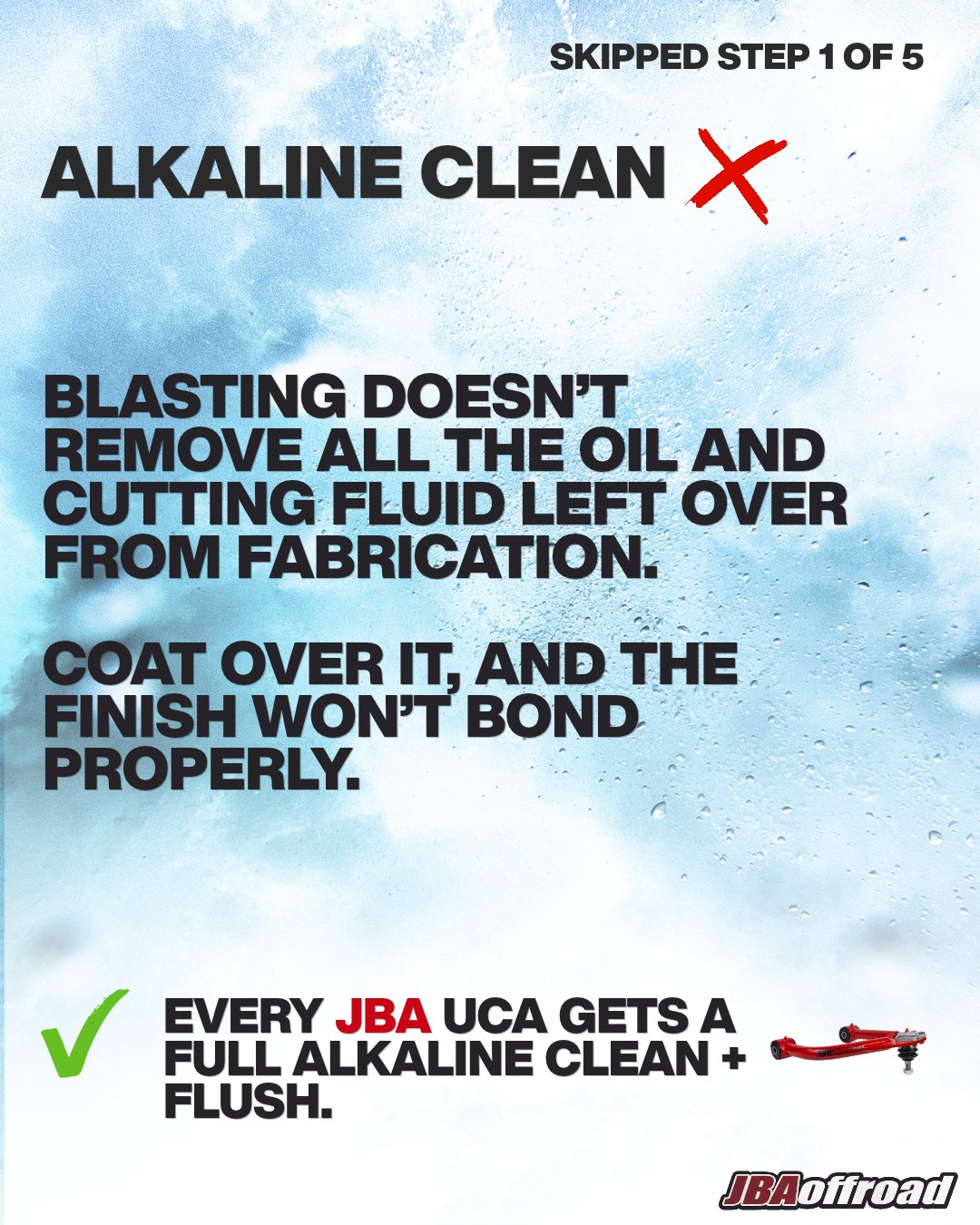
Bending, machining and welding leave oil and cutting fluid on the steel. Bead blasting cleans up the surface, but it doesn't remove all of that oil. Powder coat sprayed over oily steel won't bond properly, and that's where peeling starts.
What we do: Every JBA arm gets a full alkaline clean to strip oil and fabrication residue, followed by a flush to rinse the cleaner off.
Skipped step 2: What does iron phosphate do before powder coating?
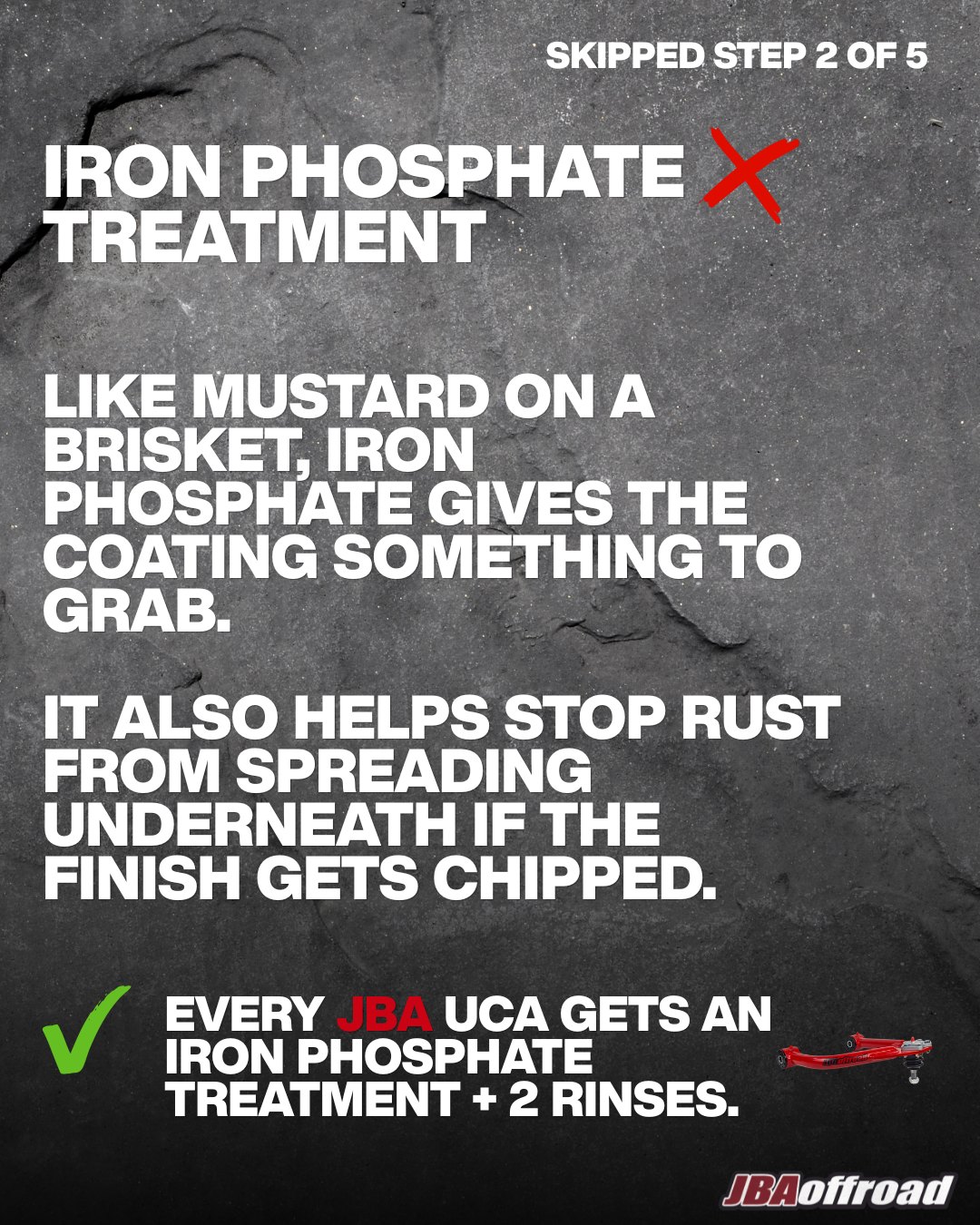
Iron phosphate is a chemical treatment that converts the surface of the steel into a thin phosphate layer. Think of it like mustard on a brisket: it gives the coating something to grab. It also helps stop rust from spreading underneath the finish if the coating gets chipped.
On its own, iron phosphate is mainly an adhesion step. That's why we pair it with the zinc-rich primer in step 5 for long-term rust protection.
What we do: Every JBA arm gets an iron phosphate treatment, then two rinses: a post-phosphate flush and a final phosphate rinse.
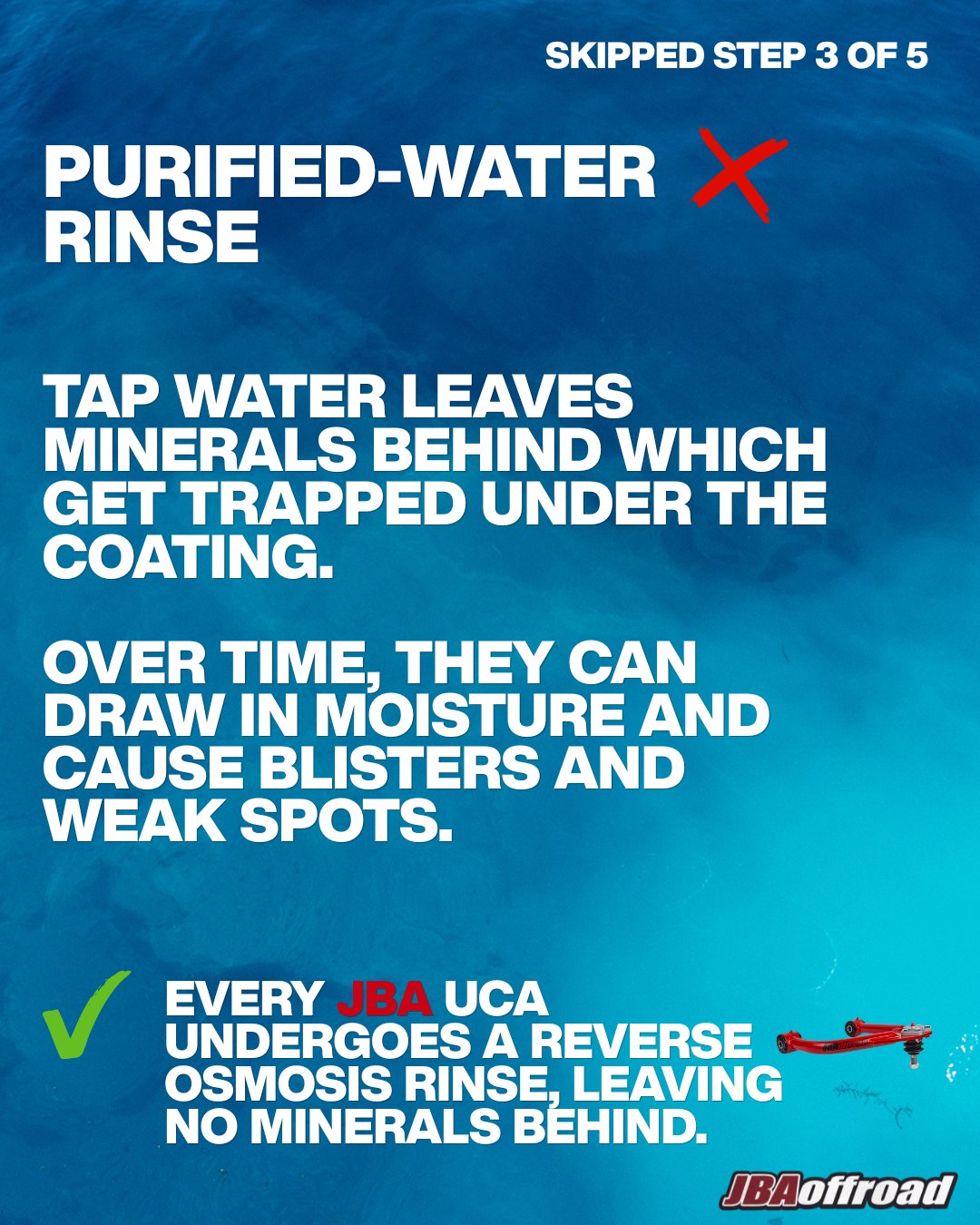
Skipped step 3: Why rinse with purified water before powder coating?
Tap water leaves minerals behind when it dries. Those minerals get trapped under the coating, and over time they can draw in moisture and cause blisters and weak spots in the finish.
What we do: Every JBA arm gets a reverse osmosis rinse, which uses purified water and leaves no minerals behind.
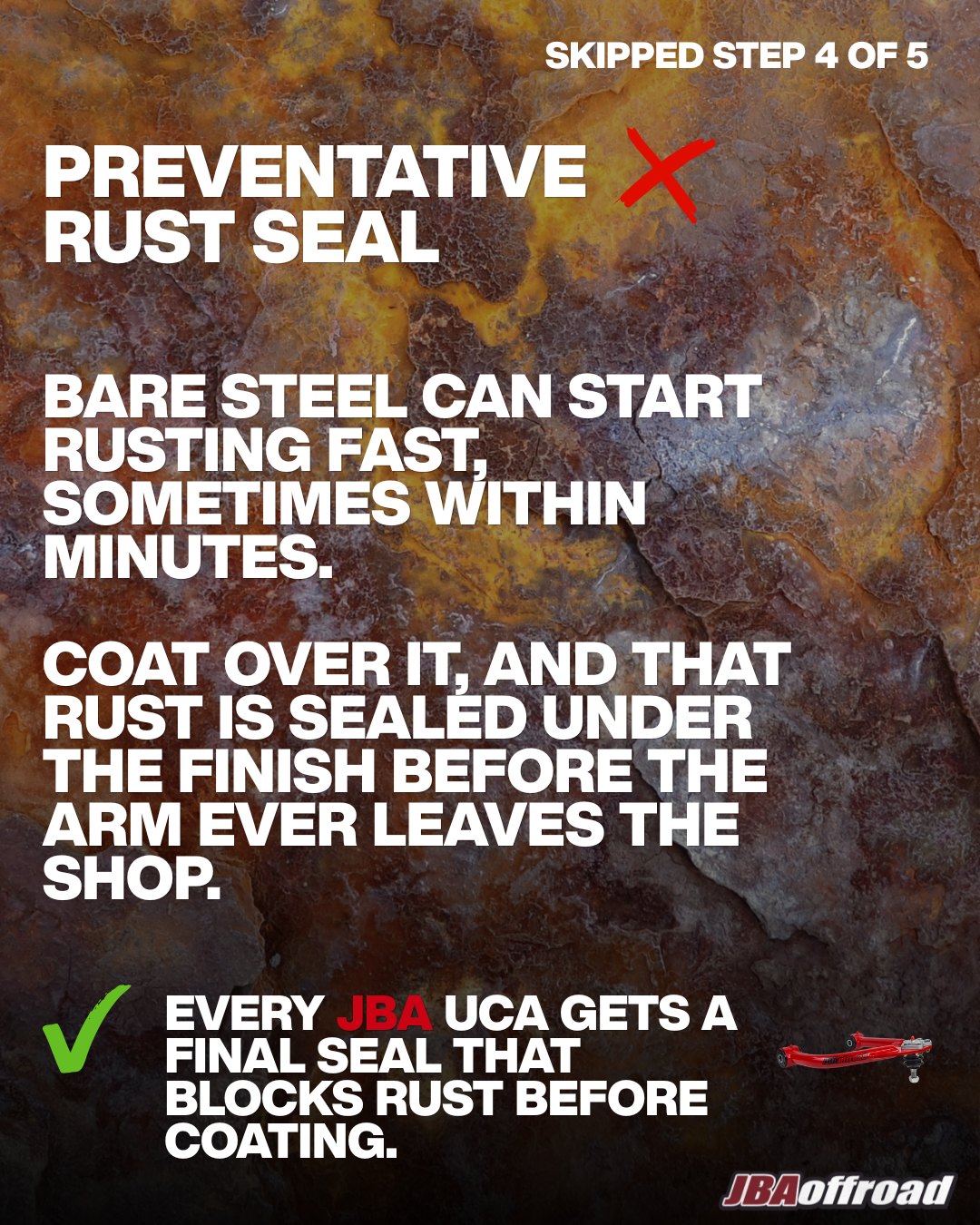
Skipped step 4: What is flash rust, and how do you stop it before coating?
Freshly cleaned bare steel can start rusting fast, sometimes within minutes. That light surface rust is called flash rust. Coat over it, and the rust is sealed under the finish before the arm ever leaves the shop.
What we do: Every JBA arm gets a final sealer that blocks flash rust between cleaning and coating.
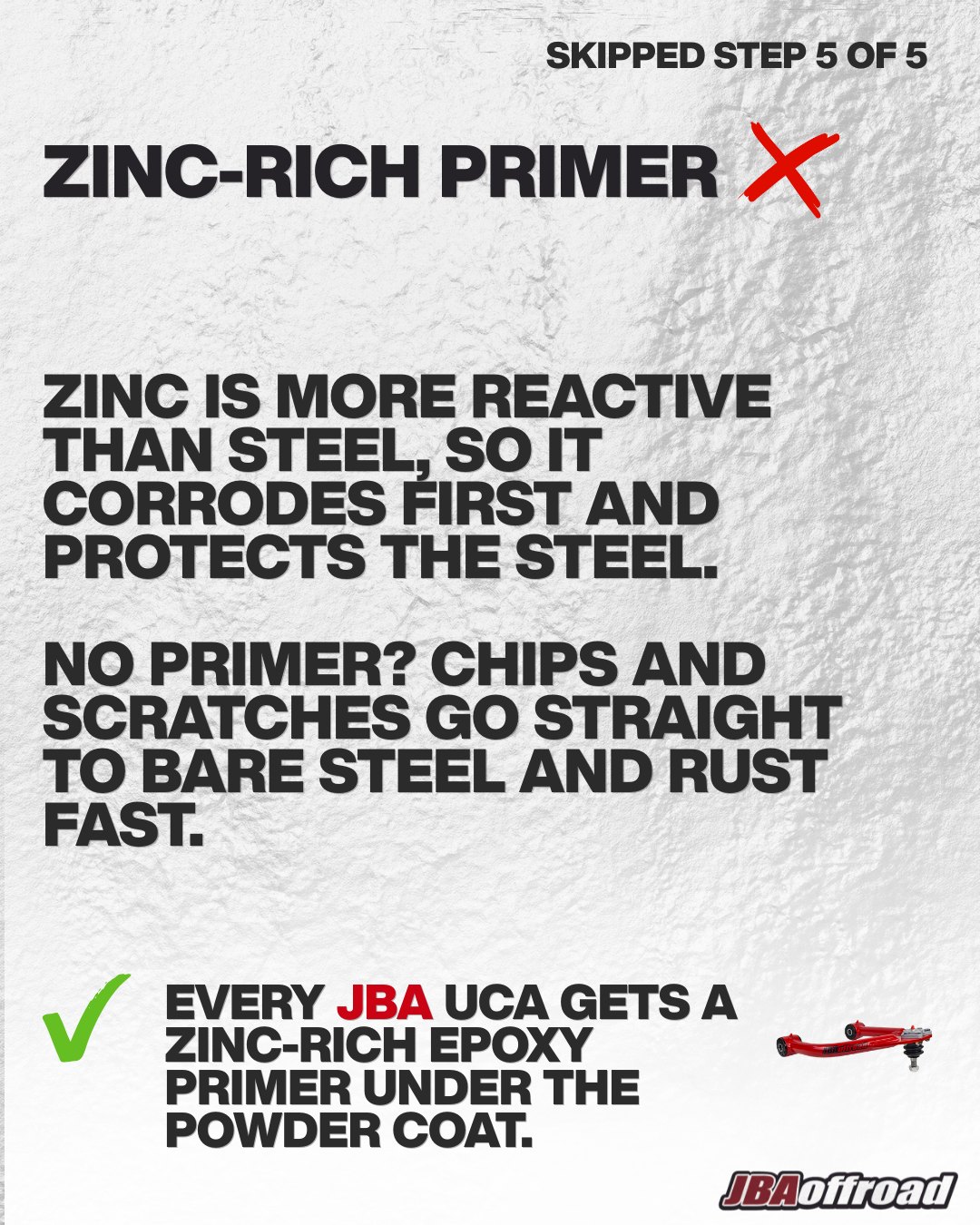
Skipped step 5: What does a zinc-rich primer do under powder coat?
Zinc is more reactive than steel, so when moisture gets in, the zinc corrodes first and protects the steel. It's the same idea as a galvanized fence post. Without a primer, a chip or scratch goes straight to bare steel, and that steel rusts fast.
What we do: Every JBA arm gets a zinc-rich epoxy primer under the powder coat. Zinc primers work best over a blasted surface, which is one reason bead blasting comes first.
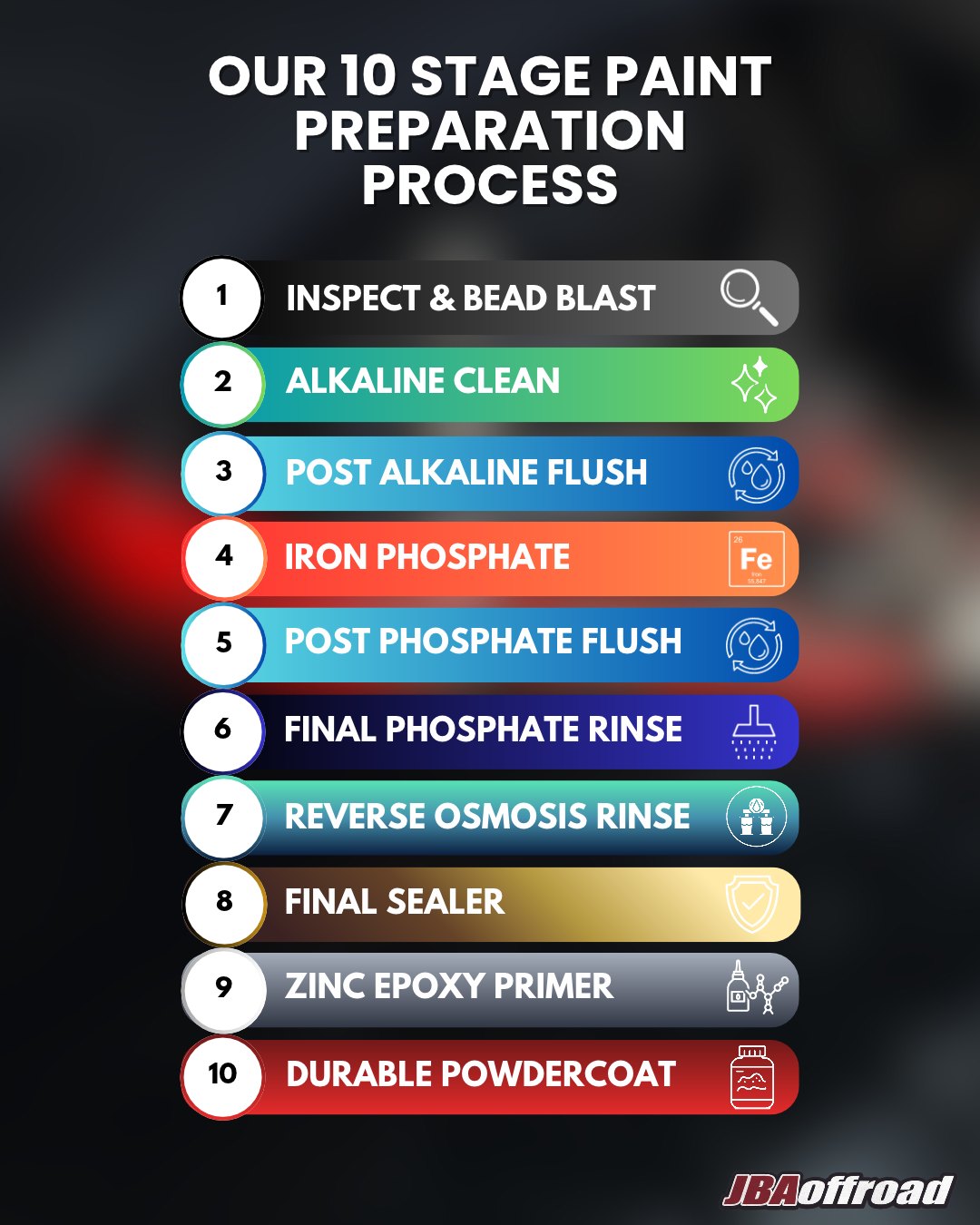
What is JBA's 10-stage powder coat process?
Here's the full process every JBA upper control arm goes through, in order.
| Stage | Step | What it does |
|---|---|---|
| 1 | Inspect and bead blast | Checks the arm, then blasts the surface clean |
| 2 | Alkaline clean | Removes oil and cutting fluid left from fabrication |
| 3 | Post-alkaline flush | Rinses the cleaner off |
| 4 | Iron phosphate | Gives the coating something to grab and helps stop rust spreading under chips |
| 5 | Post-phosphate flush | Rinses off excess phosphate |
| 6 | Final phosphate rinse | Second rinse after phosphating |
| 7 | Reverse osmosis rinse | Purified-water rinse that leaves no minerals behind |
| 8 | Final sealer | Blocks flash rust before coating |
| 9 | Zinc epoxy primer | Zinc corrodes first, protecting the steel if the finish chips |
| 10 | Durable powder coat | Tiger Drylac Bengal Red, cured at 400°F |
After curing, every arm gets a final visual inspection. JBA arms are built in our facility in Souderton, Pennsylvania, and powder coated locally in Pennsylvania. For more on our finish, see What coating does JBA use on the steel a-arms? and our Upper Control Arm FAQ.
We don't skip steps
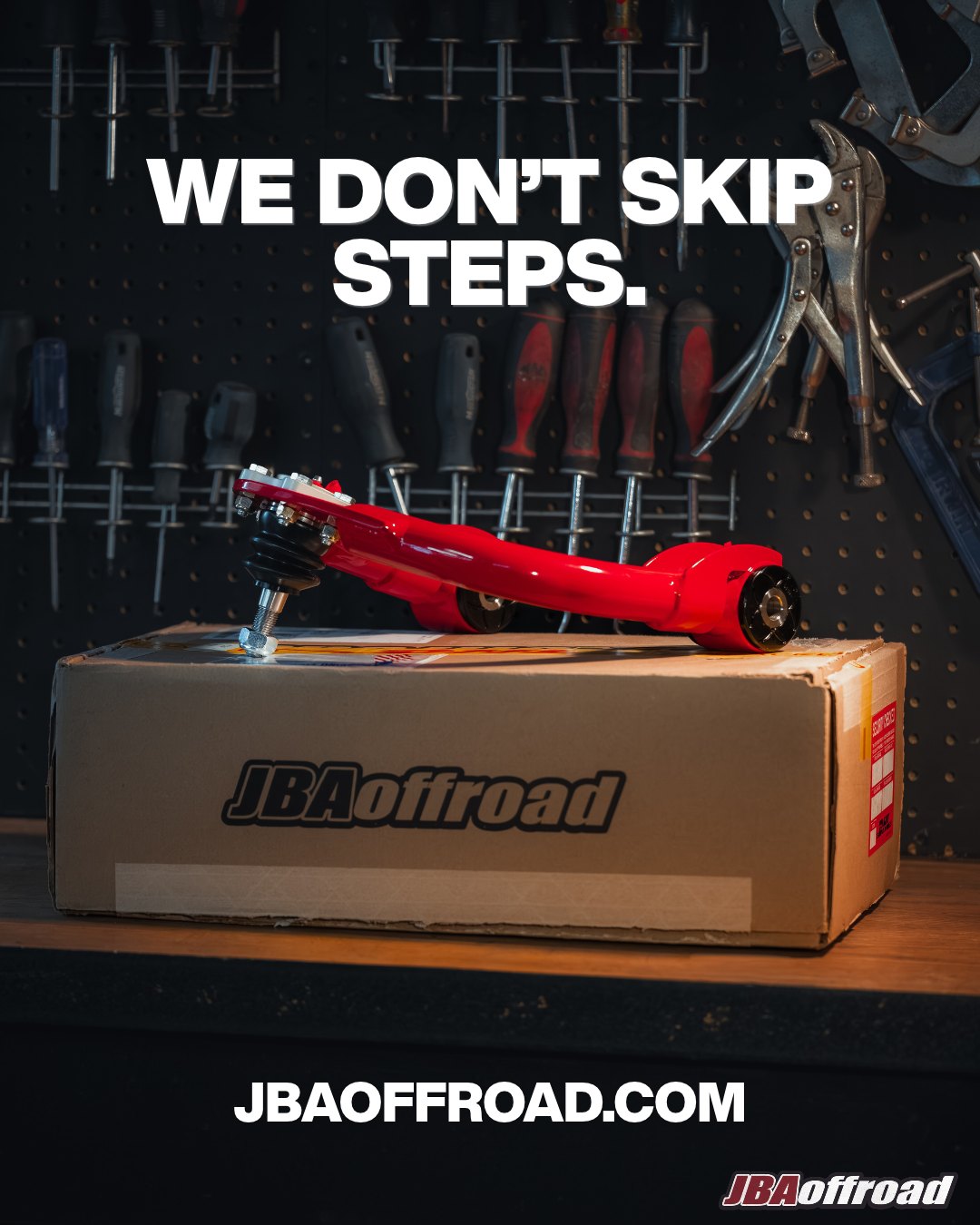
A clean finish on day one is easy. Keeping it through years of salt, mud and rock chips takes the prep nobody sees. That's why every JBA upper control arm gets all 10 stages, on top of American-made steel tubing and a lifetime structural warranty.
Shop JBA upper control arms by vehicle, or read more on choosing off-road suspension parts you can trust.
Frequently asked questions
What powder coat does JBA use on its upper control arms?
JBA uses Tiger Drylac Bengal Red powder coat over a zinc-rich epoxy primer, cured at 400°F. Here's JBA's full coating process.
Why is my powder coat peeling or bubbling?
Peeling and bubbling usually trace back to prep, not the powder itself. The most common causes are oil left on the steel because it skipped an alkaline clean, minerals left behind by a tap-water rinse, or flash rust sealed under the finish.
Will powder-coated control arms rust if the coating chips?
Chips are going to happen in the wheel well. On arms coated straight over bare steel, a chip exposes the steel, and rust can spread underneath the finish. JBA's iron phosphate treatment and zinc-rich epoxy primer help stop rust from spreading out from a chip.
Is the powder coat covered by JBA's warranty?
Yes. JBA covers the powder coat, ball joints and bushings for one year, and the structural integrity of the arms for life. See the full JBA warranty.
Can I get JBA upper control arms in a different color?
JBA arms only ship in Tiger Drylac Bengal Red, but you can have them painted any color you like. More on JBA colors.
Where are JBA upper control arms made?
JBA builds its arms in a 16,000 sq ft facility in Souderton, Pennsylvania, and the powder coating is done locally in Pennsylvania. Where JBA parts are made.
How do I keep powder-coated control arms in good shape?
Rinse mud and road salt off the arms when you wash the truck, especially in winter, and check for chips when you grease the bushings and ball joints. Our monthly maintenance guide for lifted rigs covers the rest.