
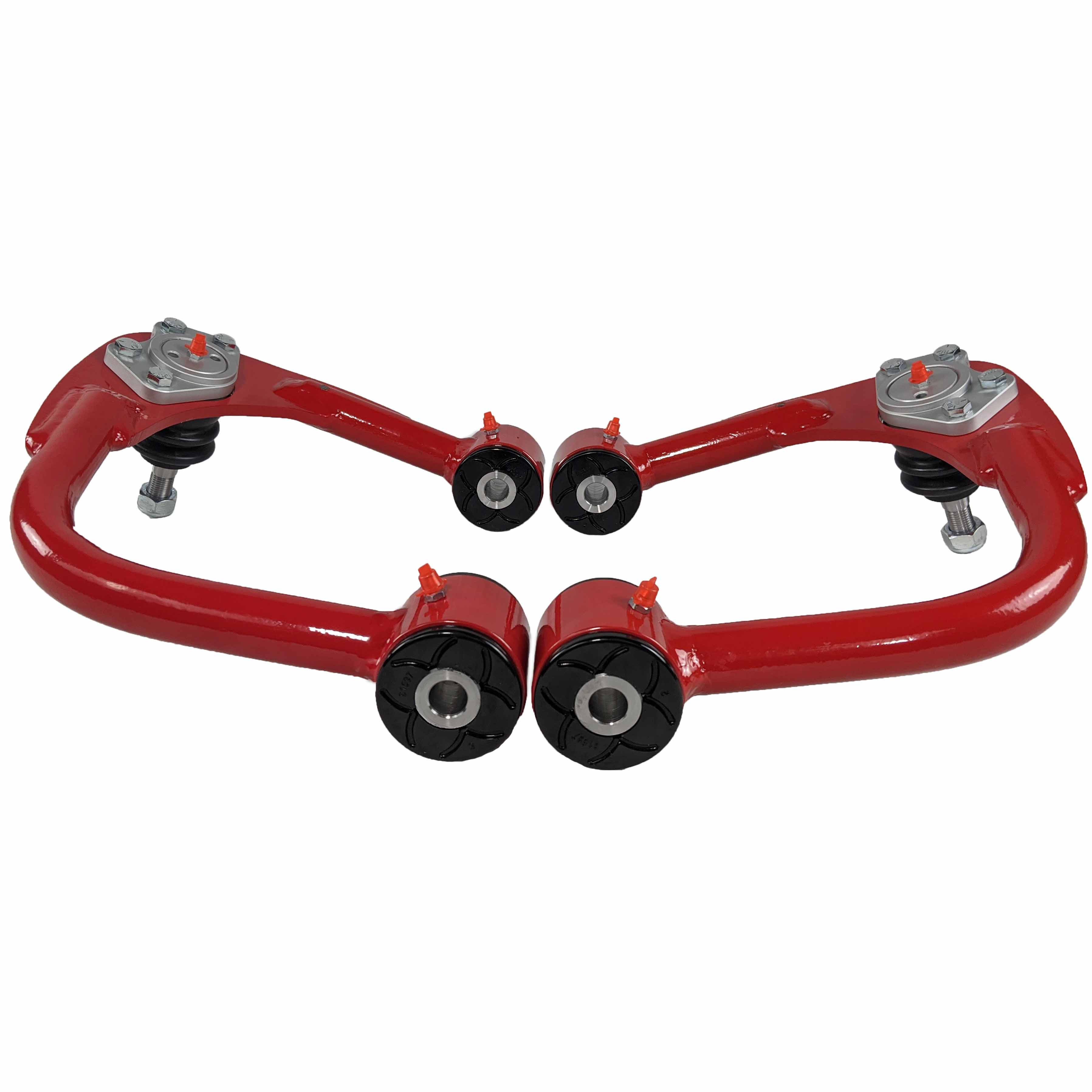
You usually notice upper control arms when something starts feeling off - the front end wanders after a lift, alignment numbers get harder to hold, or the suspension tops out sooner than it should. That is when the question gets real: what do upper control arms do? On any independent front suspension truck or SUV, they are a major part of how the front suspension moves, how the wheel stays positioned, and how the vehicle behaves on pavement and on rough ground.
A lot of people think of upper control arms as just another bracket with a ball joint attached. That undersells their job. An upper control arm helps guide the steering knuckle through suspension travel, works with the lower control arm to maintain geometry, and has a direct effect on alignment, tire wear, articulation, and ride control. On a stock-height vehicle, the factory arm is built around factory angles. Once you add lift, larger tires, more preload, or harder use, the demands change fast.
What do upper control arms do in a suspension system?
The short answer is they locate and control the top of the steering knuckle. The upper control arm connects the frame to the knuckle through bushings at the frame side and a ball joint at the outer end. As the suspension compresses and droops, that arm travels through an arc and helps determine where the wheel sits through the entire range of motion.
That matters because the wheel does not just move straight up and down. It changes camber and caster as the suspension cycles, and those changes affect how the tire contacts the ground. If the upper control arm geometry is wrong for the setup, the front end can feel nervous, harsh, or limited long before you reach the advertised lift height.
In practical terms, upper control arms help manage four critical jobs: wheel motion, alignment geometry, suspension travel, and load handling. If one of those is compromised, the vehicle may still drive, but it will not drive the way a properly sorted lifted rig should.
Why upper control arms matter more on lifted trucks and SUVs
A factory upper control arm is designed around stock ride height and stock operating angles. Lift the vehicle 2 to 3.5 inches, and the arm now sits at a steeper angle at rest. That changes ball joint positioning, reduces available droop travel, and can push the suspension closer to binding.
This is where many lifted vehicles start showing the usual symptoms. The ride gets sharper over potholes. The front suspension feels like it runs out of extension too early. Alignment techs may struggle to get caster back where it needs to be. In some cases, the tire or coil bucket clearance gets tight enough to become its own problem.
That does not mean every lifted truck automatically needs aftermarket upper control arms. It depends on lift height, vehicle platform, wheel specs, intended use, and how sensitive you are to ride and handling changes. But on many IFS trucks and SUVs, a well-engineered upper control arm becomes one of the key parts that brings the front suspension back into a usable operating window.
They help restore geometry
One of the biggest reasons to upgrade is geometry correction. A properly designed aftermarket upper control arm can reposition the ball joint and change the arm shape to better match the new ride height. That can improve caster range, reduce bad operating angles, and help the suspension move more naturally through travel.
Caster is a big one. On lifted trucks, insufficient caster often shows up as vague steering, reduced straight-line stability, or a vehicle that does not settle confidently at highway speed. A better upper control arm can help recover that lost stability.
They improve usable suspension travel
Lifting a vehicle with preload or taller coilovers changes where the suspension sits in its travel. If the stock upper control arm and ball joint are already near their angle limit, droop travel gets cut short. You end up with a suspension that looks taller but feels more restricted.
A purpose-built upper control arm can provide more ball joint articulation and better clearance through the travel arc. That helps the front suspension use more of its available movement instead of hitting angle limits early. For trail driving, washboard roads, and uneven terrain, that difference is easy to feel.
They can reduce wear in hard-use setups
When suspension angles get pushed beyond what the stock parts were built to handle, wear tends to accelerate. Ball joints, bushings, and even tires can take the hit. A stronger arm with serviceable components is not just about strength for the sake of strength. It is about building around the actual loads and movement a lifted off-road vehicle sees.
That is especially true if the vehicle runs heavier tires, added bumper weight, or frequent off-road miles. Factory-style parts can survive for a while in that environment, but survive and perform are not the same thing.
How upper control arms affect alignment and handling
Alignment is where a lot of suspension theory becomes real-world tire wear and steering feel. Upper control arms influence camber and caster, and those two settings matter every mile.
Camber controls how upright the tire sits relative to the road. Caster influences steering stability and return-to-center. Toe matters too, but the upper control arm does not directly adjust toe. What it does do is help place the knuckle where the alignment settings can be achieved and maintained.
On a stock truck used for commuting, small geometry compromises may be tolerable. On a lifted truck with bigger tires and more leverage acting on the suspension, those compromises show up quicker. The steering can feel less planted. The truck may chase grooves in the road. The outer edges of the tires may tell the story before the driver does.
A quality upper control arm is not a magic fix for every bad driving lifted truck. Springs, shocks, tire pressure, wheel offset, and alignment quality all matter. But if the arm geometry is wrong, you are asking every other part to work around it.
What makes an aftermarket upper control arm better?
Not all aftermarket upper control arms solve the same problems, and not all of them solve them well. Some are mainly cosmetic upgrades. Others are built around actual suspension geometry and long-term serviceability.
The key differences usually come down to ball joint design, bushing quality, arm shape, material strength, and fitment-specific engineering. On an off-road rig, articulation and clearance matter. On a daily-driven lifted truck, noise control and maintenance matter just as much. The right arm needs to do both.
A high-quality upper control arm should provide improved ball joint operating range, maintain quiet and controlled bushing movement, and be built strong enough to handle repeated impacts without becoming a wear item itself. Serviceable parts also matter. Rebuildable or greasable components can make a huge difference for owners who actually keep their rigs for the long haul.
That is why serious enthusiasts pay attention to more than just lift compatibility. They want to know how the arm behaves at full droop, how it holds alignment, how it handles real trail abuse, and whether it can be maintained instead of thrown away.
When should you replace or upgrade upper control arms?
If the factory arms are worn out, the answer is obvious. Torn bushings, loose ball joints, clunks over bumps, and uneven front tire wear are all classic signs that something in the assembly is done.
The more common question is when to upgrade even if the stock arm is not technically failed. If your truck or SUV is lifted and you are dealing with limited droop, poor alignment numbers, contact issues, or sketchy steering feel, the upper control arm deserves a hard look. The same goes for vehicles that see regular off-road use where stock components are working outside their original design envelope.
There is a trade-off here. Some mild lifts can still function acceptably with factory arms, especially if the vehicle stays mostly on-road. But acceptable is not the same as optimized. If you built the vehicle to drive harder, carry more, and stay composed off pavement, the suspension needs parts that match that mission.
For that reason, upper control arms are often one of the smartest supporting upgrades in a lifted IFS setup. A properly engineered arm does more than add strength. It helps the rest of the front suspension work the way it should.
JBA Offroad has built its reputation around that exact problem - delivering upper control arms engineered for lifted applications where geometry, articulation, durability, and serviceability all have to work together.
If you are building a truck or SUV to do more than sit tall in a parking lot, upper control arms are not a small detail. They are one of the parts that decide whether the front suspension feels controlled, capable, and confidence-inspiring every time the terrain gets rough. Choose accordingly, and the whole vehicle starts working like a real suspension system again.