
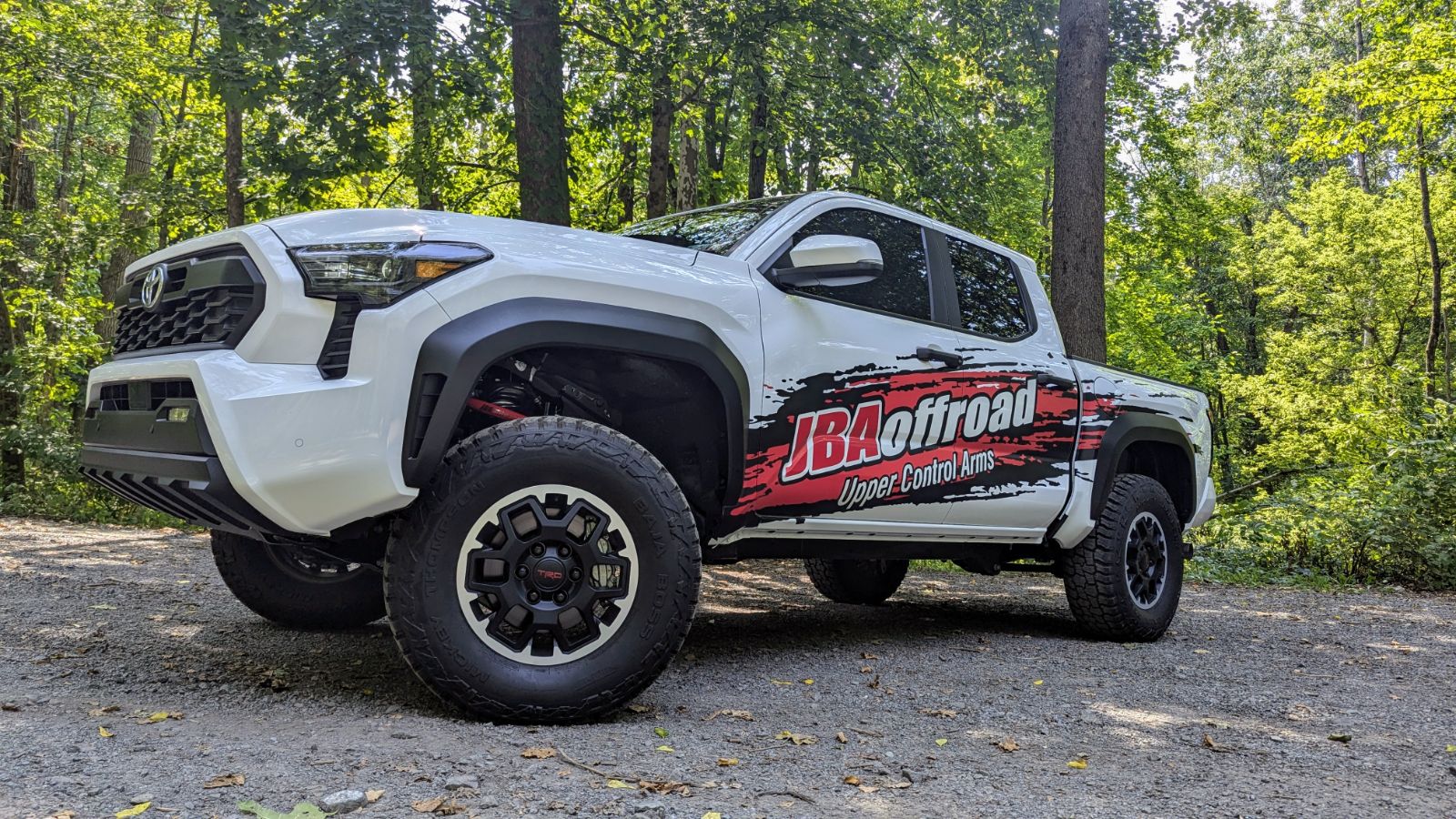
You feel it before you measure it. The truck sits taller, the tires fill the wheel wells, and the stance looks right - but the front end starts telling a different story. Alignment gets touchy. Droop travel feels limited. Ball joint angles look sharper than they should. That is usually when the real question shows up: do lifted trucks need upper control arms?
The honest answer is not always, but very often yes. If you are lifting an independent front suspension truck or SUV, upper control arms can go from optional to necessary fast. It depends on lift height, suspension design, wheel and tire setup, and how the truck is actually used. A mall crawler with a mild leveling kit has different demands than a trail truck that sees washboard roads, whoops, articulation, and full suspension extension on a regular basis.
What matters most is not whether the truck is technically lifted. What matters is what that lift does to suspension geometry.
Why do lifted trucks need upper control arms in the first place?
On most IFS trucks, the factory upper control arm was designed around factory ride height, factory alignment range, and factory suspension travel. Once you add preload, a spacer, coilovers, or a full lift, you change the resting angle of the suspension. That changes the relationship between the spindle, the upper ball joint, the coil bucket, and the alignment cams.
At small lift heights, the factory arm might still work. At moderate lift heights, it usually starts giving up ground. You can run out of caster adjustment, push the ball joint into a poor operating angle, and reduce usable droop travel because the arm or joint reaches its limit too early.
That is the point of an aftermarket upper control arm. A properly engineered UCA is built for lifted geometry, not stock geometry. It is designed to recover alignment, improve ball joint positioning, maintain articulation, and survive repeated abuse at angles the factory arm was never meant to live with.
The stock arm is usually the weak link
Factory upper control arms are built to satisfy mass production, comfort targets, and stock suspension travel. They are not usually built for lifted use with larger tires, added unsprung weight, and off-road extension cycles.
The biggest issue is geometry. Raise the truck and the stock ball joint sits closer to the edge of its range. That can create binding at droop, especially on setups in the 2- to 3-inch range where owners often assume stock parts are still fine. In reality, that is exactly where problems start showing up.
The second issue is alignment. Many lifted trucks lose caster after the front end comes up. Low caster can make the truck feel vague, twitchy, or less settled at highway speed, especially with heavier tires. A quality aftermarket UCA often restores that lost caster window and gives the alignment tech more room to work with.
The third issue is durability. Once you combine steep operating angles with off-road use, stock-style ball joints and bushings wear faster. That does not always happen immediately, but the front end usually starts paying for it over time.
When you can get away without upper control arms
Not every lifted truck needs them on day one. If you are running a mild front level on a platform known to keep decent alignment numbers at that height, the factory arms may remain serviceable. Some trucks tolerate about 1.5 to 2 inches of front lift without major issues, especially if they stay on-road and keep close to stock wheel offset.
But even here, there is a difference between can and should. A truck may align within spec while still operating at less-than-ideal ball joint angles. It may drive acceptably on pavement but top out harshly off-road. It may not rub the coil bucket yet, but be one wheel spacer or tire change away from doing it.
If the goal is basic appearance and light street duty, stock UCAs might hold the line for a while. If the goal is reliable performance, better travel, and fewer front-end compromises, aftermarket arms start making sense much earlier.
Signs your lifted truck needs upper control arms
You usually do not need a dramatic failure to know the front end wants help. The warning signs are pretty consistent.
If your truck cannot get back into alignment after a lift, especially caster, that is a major clue. If the ride feels harsh at full extension or the suspension seems to run out of droop too soon, that matters too. Uneven tire wear, wandering steering, clunks from the front suspension, or visibly aggressive ball joint angles are all signs the stock arms are being pushed past their comfort zone.
Coil bucket contact is another red flag on certain platforms. Some stock arm designs simply do not play well with lift height and droop. If the arm geometry is forcing interference, the suspension is not working the way it should.
What upgraded upper control arms actually fix
This is where the difference between a generic part and a purpose-built arm matters. A well-designed upper control arm is not just a stronger version of stock. It is a geometry correction tool.
First, it repositions the ball joint so the joint operates in a healthier range at lifted ride height. That helps preserve articulation and reduces the chance of binding as the suspension cycles.
Second, it improves alignment potential, especially caster. More usable caster helps straight-line stability and steering return, which becomes more important as wheel and tire weight goes up.
Third, it can restore droop travel. If the stock arm or joint limits extension, the truck never uses the full capability of the coilover or strut. A lifted-specific UCA can open that back up so the front suspension works instead of fighting itself.
Fourth, it can improve long-term service life. Better bushings, stronger housings, and rebuildable or serviceable joints matter when the truck sees dust, mud, washouts, and repeated hits. Off-road parts should be built to be maintained, not treated like disposable wear items.
Do all aftermarket upper control arms solve the same problems?
No, and this is where people get burned.
Some aftermarket UCAs are little more than cosmetic upgrades. They may look tougher than stock, but if the ball joint range, caster correction, and bushing quality are not there, you are not really fixing the lifted geometry problem. You are just replacing one compromise with another.
A real lifted-truck UCA needs the right ball joint cup angle, the right arm shape, the right clearance profile, and bushings that stay quiet while handling abuse. It also needs to be matched to the platform. Toyota geometry is not GM geometry. A Jeep front end does not ask for the same solution as a late-model half-ton truck.
That is why vehicle-specific engineering matters. Suspension parts are not universal truths. They are geometry problems with platform-specific answers.
Lift height matters, but use matters more
A lot of owners ask for a hard cutoff. One inch, two inches, three inches - at what point do upper control arms become mandatory?
The cleaner answer is this: the higher you lift an IFS truck, the more likely you need them, but your use case can move that threshold up or down.
A truck with a 2-inch front lift that spends weekends on rocky trails is under more suspension stress than a truck with a 2.5-inch lift that stays on pavement. A heavier overland build with bumpers, armor, and larger tires asks more from the front end than a lightly modified daily driver. Speed matters too. Repeated high-speed extension and compression cycles expose weak geometry much faster than casual driving.
So yes, lift height matters. But how you drive matters just as much.
The smart way to think about the upgrade
If you are lifting an IFS truck, upper control arms should be part of the planning stage, not an afterthought after the alignment rack says no. Build the front suspension as a system. Ride height, shocks or coilovers, arms, wheels, tires, and intended use all work together.
That approach saves money in the long run because it prevents chasing symptoms. Too many owners try to solve vague steering, front-end noise, poor alignment, or limited travel one problem at a time when the core issue is that the stock UCA is no longer right for the geometry.
A well-engineered arm fixes the problem at the source. That means better alignment numbers, cleaner travel, more confidence at speed, and less stress on the parts that hold the front end together. For serious lifted applications, that is not an accessory. It is part of doing the job right.
JBA Offroad has built its reputation on that exact principle - upper control arms should not just fit a lifted truck, they should improve how it works under real load, real travel, and real off-road punishment.
If your truck is lifted and the front suspension is asking for more than the factory arm was built to give, listen to it. Suspension geometry always tells the truth, and it is a lot cheaper to answer it with the right parts before the trail does.