
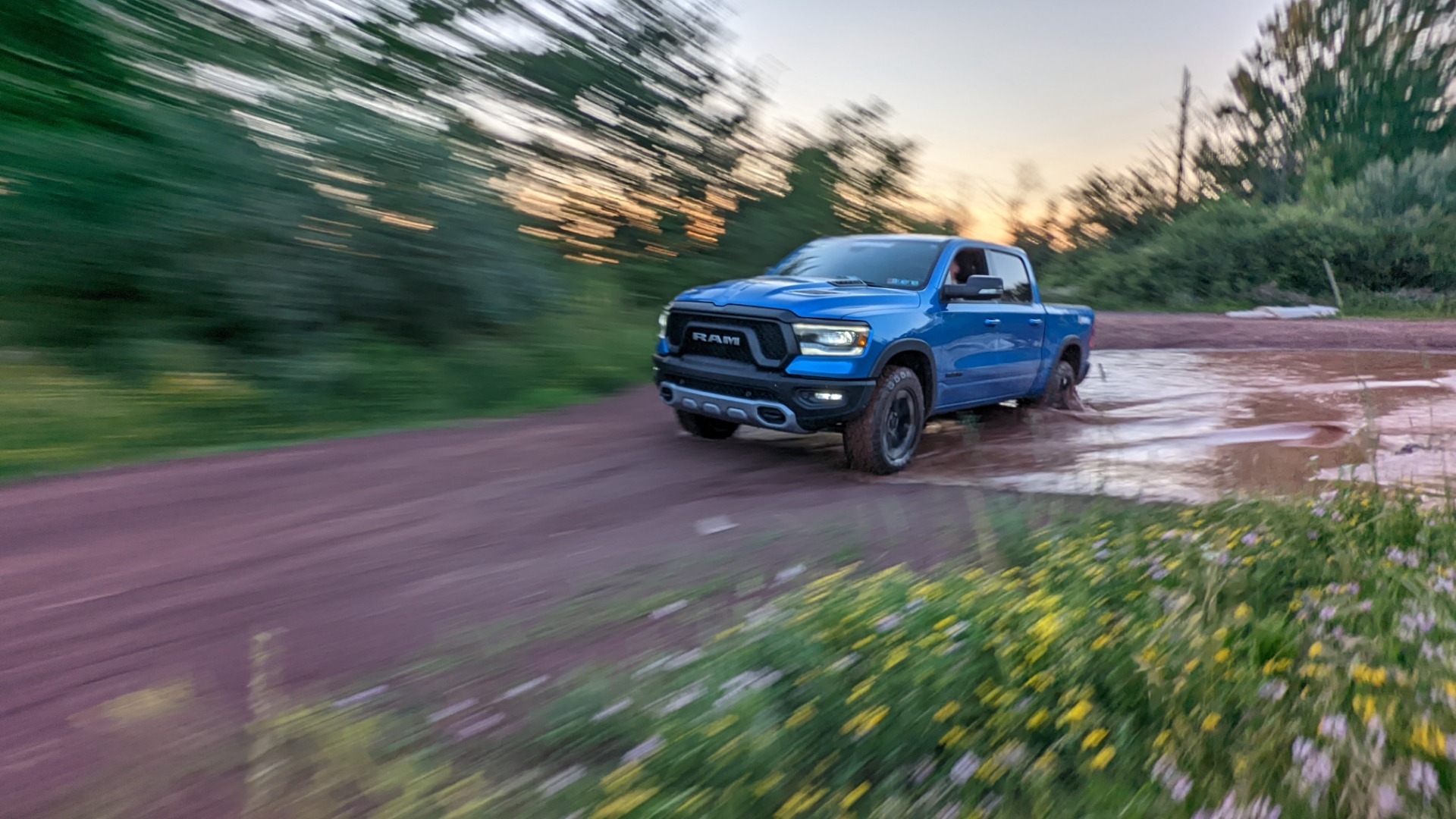
Lift your Dodge truck a couple inches and the factory front end starts showing its limits fast. That is where dodge upper control arms lifted truck setups stop being a cosmetic upgrade and start becoming a geometry fix. If your truck feels harsh over chop, tops out too easily, or chews through front-end parts after the lift, the upper control arm is usually part of the story.
A lot of owners think of upper control arms as just a stronger replacement for stock. Strength matters, but it is not the whole job. On a lifted truck, the arm has to correct ball joint angle, support usable droop travel, stay quiet on the street, and survive real off-road load without turning routine maintenance into a headache. If it misses on any of those points, the truck may look right and still drive wrong.
Why lifted Dodges stress the stock upper arm
Factory upper control arms are built around factory ride height. Once you raise the truck, the suspension spends more time operating at a steeper angle. That changes where the ball joint sits through the travel range, and it can push stock-style components closer to their limit than they were ever meant to live.
The problem usually shows up in a few ways. You may notice reduced droop, which means the suspension runs out of extension too early. You may get a rougher ride because the truck tops out over potholes and washboard instead of extending cleanly. Alignment can also become more stubborn, especially when you are trying to dial in a setup that still tracks well on the highway.
For trucks that actually see dirt, rocks, or repeated high-speed hits, those small geometry issues become wear issues. Ball joints bind. Bushings get noisy. The front end starts feeling loose before it should. A lifted truck asks more from every suspension part, and the upper control arm sits right in the middle of that load path.
What good dodge upper control arms for a lifted truck should actually do
A proper aftermarket arm is not just about replacing stamped factory metal with a tubular shape. It needs to be engineered around the lift height and the way the truck is used. Geometry comes first. The arm should place the ball joint in a position that restores safe operating angle and allows the suspension to cycle without binding itself into a dead spot.
Travel matters just as much. On many lifted trucks, the limiting factor is not the shock itself but the angle and range of the upper ball joint. A better arm helps reclaim droop, which improves ride quality and front-end control when the terrain gets uneven. More controlled extension means the tire stays planted instead of skipping across the surface.
Then there is durability. Real off-road use does not care how good a part looks in the driveway. The arm needs a strong housing, quality welds, and hardware that can take repeated impact and side load. If the design relies on cheap joints or disposable wear items, it may install easily and still cost more over time.
Serviceability is the piece many buyers overlook until later. Sealed-for-life sounds convenient until the part wears out and the whole arm becomes scrap. A serviceable bushing system and rebuildable wear components are a better fit for trucks built to stay on the road and on the trail for years.
Ball joint angle is where cheap arms get exposed
If there is one place where upper control arm quality separates fast, it is the ball joint. Lifted suspension geometry puts the ball joint in a much tougher operating window. A weak or poorly positioned joint can bind at full droop, lose travel, or wear out early under larger tires and harder use.
That is why high-angle ball joint design matters on a Dodge upper control arm. The joint has to maintain smooth articulation through the suspension range without maxing out before the shock does. It also needs to hold up under heavier wheel and tire combinations, steering load, and the extra leverage that comes with off-road impacts.
This is not a place to shop by powder coat color. A control arm can look aggressive and still carry a joint that is barely adequate for a mild lift. Serious lifted truck owners should be looking at articulation range, material quality, rebuildability, and how the joint is integrated into the arm itself.
Bushings change how the truck feels every day
Most people notice ball joints first, but bushings decide a lot of what your truck feels like in normal driving. On-road harshness, squeaks, binding, and long-term maintenance all trace back to the bushing design more than many owners realize.
For a lifted daily driver that also sees dirt, the best bushing is not always the hardest one. Very stiff setups can sharpen response, but they can also transmit more noise and vibration into the cab. Softer factory-style rubber can ride well, but it may not hold up under repeated off-road articulation and bigger tires.
A smart middle ground is a serviceable design built for movement and longevity. Greaseable bushings make a difference here because they let the arm cycle smoothly while reducing wear and noise over time. That is especially useful if your truck sees mud, water, dust, and long miles between major tear-downs.
Choosing the right arm for your lift height and use
Not every lifted Dodge truck needs the same upper control arm. A mild leveling kit used for mostly highway driving has different demands than a truck with a full suspension lift, 35s, and regular trail time. The right answer depends on how much height you added, what shocks you run, and whether the truck is built for commuting, desert washboard, crawling, or all three.
For mild lifts, the goal is usually to correct ball joint angle and improve alignment while keeping ride quality clean and predictable. For more aggressive setups, arm clearance and articulation become even more critical. Once you start using the full suspension range, a control arm that looked fine on paper can become the bottleneck.
It also matters whether your truck carries extra weight. Bumpers, winches, skid plates, and camping gear all change how the front suspension rides in the stroke. A quality upper arm has to support that real-world setup, not just a clean showroom truck on stock wheels.
Why build quality matters more than marketing claims
The aftermarket is crowded with parts that promise strength but say very little about geometry, wear components, or long-term service. That is usually a red flag. A lifted truck owner should care less about flashy branding and more about how the arm is built, how the components are supported, and whether the manufacturer clearly understands suspension function.
Look for arms engineered for specific applications, not generic one-size-fits-most solutions. Dodge suspension platforms have their own packaging constraints, alignment needs, and travel characteristics. Vehicle-specific design usually fits better, aligns easier, and performs more consistently than a universal-minded arm dressed up with truck marketing.
This is also where American-made manufacturing can carry real value, especially when paired with replacement parts support. If you can rebuild the wear items instead of replacing the whole arm, the investment makes more sense for a truck that is meant to stay lifted for the long haul. That is part of why specialist manufacturers like JBA Offroad stand out - they build around geometry, articulation, and serviceability instead of treating upper control arms like an accessory.
Signs your current upper control arms are holding the truck back
Some issues are obvious, and some creep in slowly. If the front suspension tops out over everyday road imperfections, if the alignment never feels quite settled, or if the truck gets noisy after a short stretch of use, the upper control arm deserves attention.
Uneven tire wear can also be part of the picture, though it is rarely the arm alone. A control arm with poor geometry or worn bushings can make the alignment harder to maintain, especially on a lifted truck running larger tires. Clunks over bumps, visible ball joint boot stress, and limited down travel are stronger clues.
A lot of truck owners live with these symptoms longer than they should because the truck is still technically drivable. But a lifted front end that is binding, topping out, or wearing parts early is not performing the way it should. Fixing the upper control arm often changes the truck more than owners expect, especially when ride quality and front-end confidence are the goals.
The best suspension parts do not beg for attention. They just keep the geometry in line, let the suspension move the way it should, and hold together after the easy roads end. If your lifted Dodge truck is asking more from the front end, the upper control arm is not the place to cut corners.