
You feel it fast on a lifted truck. A little extra harshness over washboard. More feedback through the wheel. Maybe a front end that looks built for war but starts asking for attention sooner than expected. That is why the upper ball joint vs uniball debate matters. It is not just about what looks aggressive on a spec sheet. It is about how your upper control arms will handle miles, mud, angle change, maintenance, and real off-road abuse.
For a lot of truck and SUV owners, the answer is not as simple as saying one is better. It depends on how you use the vehicle, how often you service it, and whether your build is a daily-driven rig with weekend trail duty or a machine that spends most of its life in dirt, rocks, and high-speed desert chop.
Upper ball joint vs uniball: what changes in the real world?
At the top level, both systems do the same job. They connect the upper control arm to the steering knuckle and allow controlled movement through suspension travel and steering angle. The difference is in how they achieve that movement, how they wear, and what they ask from the owner over time.
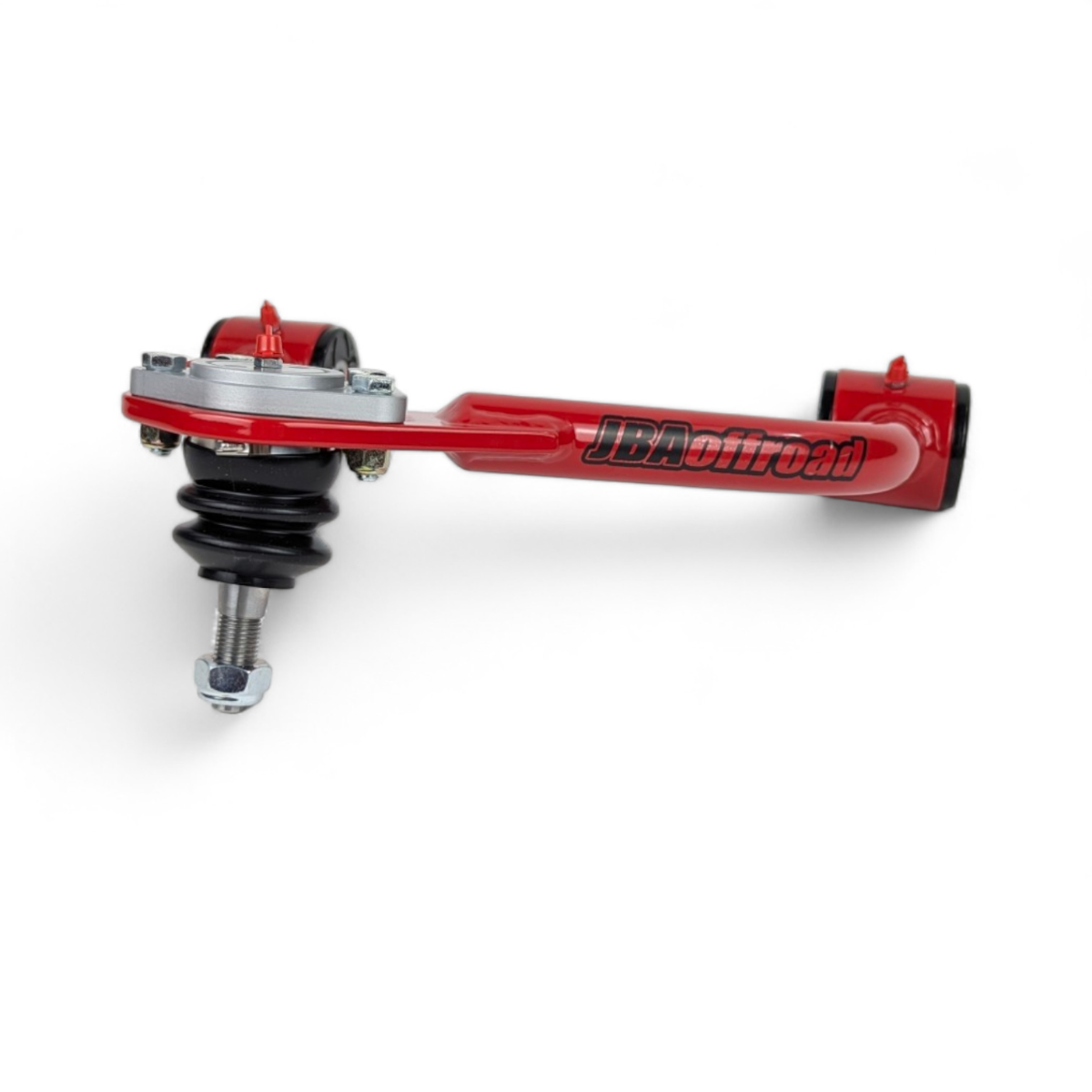
A traditional upper ball joint uses a stud and socket design protected by a boot and packed with grease. On a properly engineered aftermarket arm, that can mean sealed operation, lower noise, and strong performance in dirty environments. A uniball uses a spherical bearing, usually exposed or partially exposed, with a misalignment spacer setup that allows significant articulation. It is a proven design in many performance applications, but it is generally more exposed to contamination and often less forgiving when the vehicle lives in mixed-use conditions.
That last part matters. A lot of lifted trucks are not trail-only toys. They sit in traffic, see salted roads, get pressure washed, tow on weekends, and still need to stay tight and quiet. The right joint has to survive all of it.
Why uniballs got popular
Uniballs earned their reputation for a reason. They can provide excellent articulation and are commonly associated with long-travel setups, race-inspired suspension, and big visual appeal. If you are building around maximum droop, aggressive cycling, and a use case that prioritizes articulation over isolation, a uniball can make sense.
They also look the part. A machined cup with a large spherical bearing signals performance. In the off-road market, that aesthetic has sold plenty of upper control arms.
But popularity does not erase trade-offs. More articulation on paper does not always equal the best ownership experience on a lifted daily driver. A component can be capable and still be the wrong fit for the way most owners actually use their rigs.
Where upper ball joints win
A well-built upper ball joint setup usually wins on protection, noise control, and long-term practicality. Because the joint is booted and greaseable or sealed, it is better protected from water, grit, road grime, and all the junk that gets thrown into the suspension on a daily-driven 4x4.
That protection shows up in a few important ways. First, ball joints tend to stay quieter. Second, they generally require less frequent attention than exposed spherical bearings. Third, they are often a better match for owners who want strong off-road capability without turning routine front-end maintenance into a regular project.
That is especially true on lifted IFS trucks and SUVs where corrected geometry, consistent steering feel, and durability under load matter more than race-truck style bragging rights. The upper control arm is not just there to flex on social media. It has to maintain alignment and survive impact loads, steering input, and full suspension cycling without becoming a weak point.
Upper ball joint vs uniball for daily driving
If your truck sees pavement every week, the upper ball joint vs uniball decision usually tilts toward the ball joint side.
Daily driving exposes suspension parts to a different kind of punishment. Rain, road salt, standing water, dust, potholes, and long stretches of repetitive motion all wear parts in their own way. A uniball can handle hard use, but its exposed bearing is more vulnerable to contamination. Once dirt and moisture get in, wear accelerates. Then you may start hearing noise, feeling looseness, or chasing replacement intervals sooner than you expected.
A premium upper ball joint is often the better all-around answer for a daily-driven lifted vehicle because it balances articulation with isolation and service life. It keeps the front end feeling more controlled and civilized without giving up the strength needed for real off-road use.
That balance is where many owners get tripped up. They buy around appearance or trend, not around how the rig actually lives.
Off-road performance is more than articulation
There is a bad habit in the suspension world of reducing everything to one spec. With this comparison, that spec is usually articulation.
Yes, articulation matters. But so do durability, contamination resistance, serviceability, steering precision, and how the part behaves after months of abuse. A front-end component that works great fresh out of the box but gets noisy and sloppy after exposure is not a performance upgrade in any meaningful long-term sense.
For many trail rigs, overland builds, and lifted daily drivers, a quality ball joint upper control arm delivers the better real-world package. You still get corrected operating angles for the lift, proper clearance, and dependable travel. You also get a design that is generally better protected from the exact kind of abuse most owners deal with all year.
If you are building a more specialized vehicle with high-speed desert use, frequent inspection, and a maintenance schedule that is closer to motorsports than commuting, a uniball starts to make more sense. That is the key split. Specialized use rewards specialized parts. Mixed use usually rewards smarter compromise.
Maintenance and rebuild reality
This is where the upper ball joint vs uniball conversation gets honest.
Every suspension joint wears. Nothing is magic. The real question is how it wears, how often it needs attention, and how annoying that ownership cycle becomes.
Uniballs are often sold with a performance-first message, but they tend to ask more from the owner. They may need more regular inspection, cleaning, and eventual replacement because the bearing is more exposed. If your truck runs through mud, winter grime, or beach sand, that schedule can tighten up fast.
Ball joints are not maintenance-free forever, but a high-quality design with proper materials, sealing, and serviceability is usually easier to live with. Greaseable and rebuildable designs raise the bar even further because they give you a path to preserve performance instead of treating the whole setup like a disposable wear item.
That matters if you actually keep your vehicles. A lot of enthusiasts are done buying parts twice just because a trend told them exposed race-style hardware was the premium choice.
Strength, fitment, and geometry still matter most
Joint style is only one piece of the upper control arm equation. The arm itself has to be engineered around the lifted application. That means proper caster correction, coil bucket clearance where needed, full droop compatibility, and enough strength in the arm body and pivot design to survive real abuse.
A weak arm with a flashy uniball is still a weak arm. A poorly designed ball joint arm with bad geometry is still the wrong solution. What matters is the complete system.
That is why serious buyers should stop asking only which joint sounds tougher and start asking how the full upper control arm was built. Was it designed for lifted use or adapted after the fact? Is the joint serviceable? Is the travel controlled correctly? Does it hold alignment? Does it stay quiet? Can it survive years of use instead of just the first few trail photos?
Those are the questions that separate marketing from engineering.
So which one should you choose?
If you want the blunt version, choose a uniball when your build is heavily off-road focused, you value maximum articulation, and you accept the added inspection and maintenance that comes with a more exposed bearing design.
Choose an upper ball joint when you want a stronger all-around solution for a lifted daily driver, an overland rig, or a weekend trail truck that still needs to stay quiet, tight, and dependable in ugly real-world conditions. For most owners, that is the smarter call.
That is also why purpose-built ball joint UCAs have built such a strong following among serious enthusiasts. They solve the problems lifted vehicles actually have - bad angles, weak factory limitations, wear under load, and front-end manners that go downhill after the lift. When the joint is engineered correctly, you get confidence on the trail without adding headaches in the driveway.
One mention is enough here: that philosophy is exactly why JBA Offroad has stayed focused on serviceable, heavy-duty ball joint upper control arms instead of chasing exposed-hardware trends.
The right suspension parts should make your rig feel more capable, not more needy. Buy for your use case, not the catalog photo, and your front end will thank you every time the trail gets rough and the drive home is still smooth.