
A lifted truck will expose weak parts fast. If your front end sees bigger tires, steeper angles, washboard roads, trail miles, and daily-driver abuse, the ball joint in your upper control arm stops being a small detail and starts becoming a major reliability point. That is exactly why rebuildable ball joints explained in plain terms matters for anyone building a suspension that has to work hard, stay quiet, and hold alignment under real load.
Most owners have felt the difference between a part that looks good on a spec sheet and a part that survives actual use. Ball joints sit right in that gap. They control movement between the steering knuckle and control arm while allowing the suspension to cycle and the wheels to turn. On a stock-height vehicle with mild use, a sealed factory-style joint can be enough. On a lifted rig, that answer gets less simple.
What rebuildable ball joints actually are
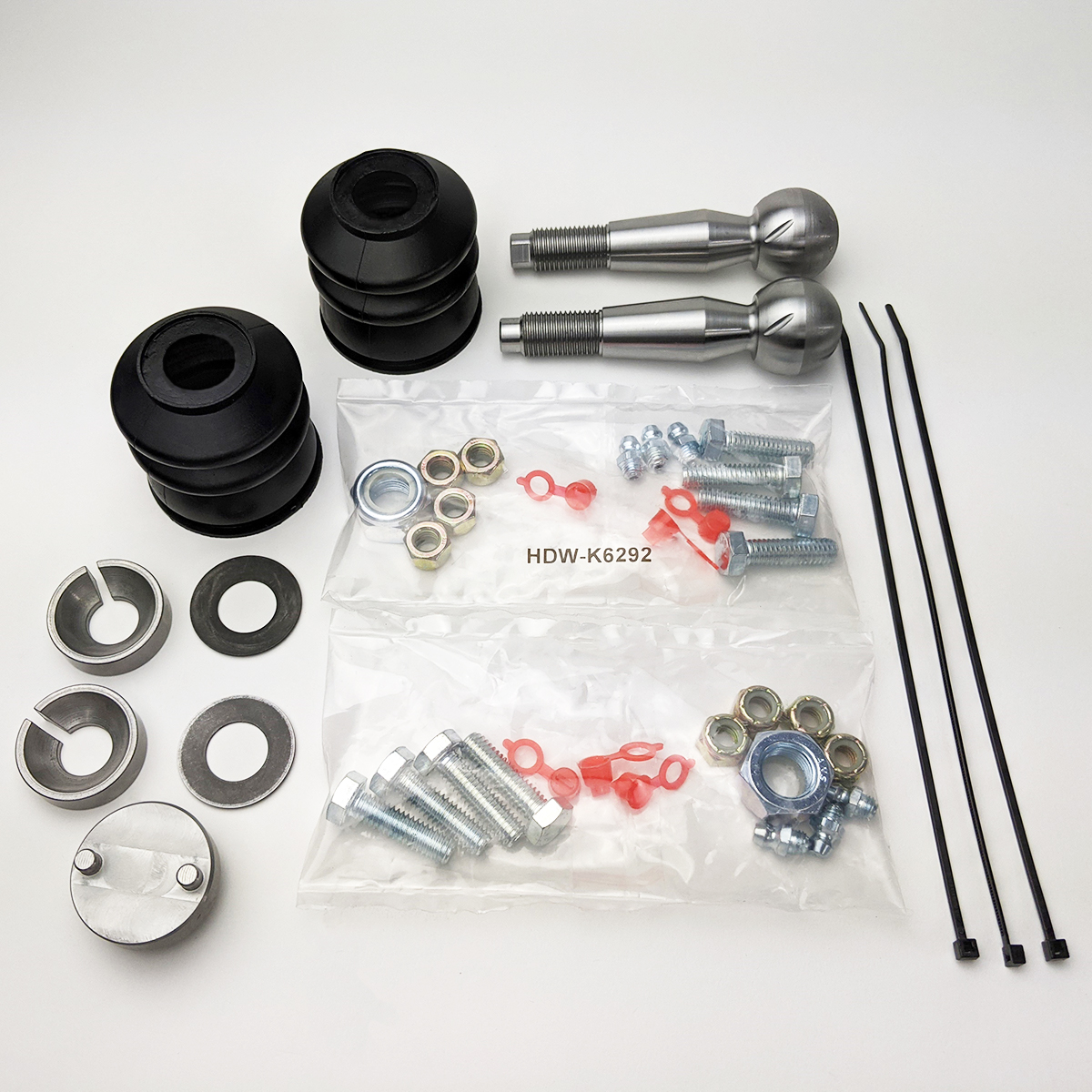
A rebuildable ball joint is built so the wear components can be serviced or replaced instead of forcing you to throw away the entire assembly when wear shows up. The housing stays in place, while internal parts such as the bearing surfaces, races, preload components, or retainers can be renewed to restore proper function.
That sounds simple, but the advantage is bigger than just replacing parts. In a hard-use suspension system, serviceability changes ownership. Instead of treating the joint like a disposable item, you treat it like a performance component that can be maintained and kept in spec.
That matters even more on aftermarket upper control arms for lifted applications, where the joint may be working at a more aggressive angle than stock. A rebuildable design gives the owner a way to maintain performance rather than waiting for play, noise, or uneven wear to force a full replacement.
Why lifted trucks and SUVs stress ball joints harder
Lift height changes suspension geometry. Add larger tires, more unsprung weight, rough terrain, and repeated impact loads, and the upper ball joint has a much harder job than it did from the factory.
The issue is not just vertical movement. The joint also sees side loads during cornering, steering input, off-camber articulation, and repeated shock from potholes, ruts, and rocks. On many builds, the stock-style joint was never designed for that combination of angle and abuse.
This is where quality matters. A properly engineered rebuildable ball joint is not just about being serviceable. It also needs the right range of motion, correct preload, durable materials, contamination resistance, and a housing that stays secure under repeated stress. If one of those factors is weak, the word rebuildable does not save it.
Rebuildable ball joints explained by function
At the center of the joint is a ball stud that pivots inside a precision housing. As the suspension cycles and the steering turns, the stud needs to articulate smoothly without excessive looseness. The challenge is balancing movement with control. Too tight, and articulation suffers or wear accelerates. Too loose, and you get play, noise, vague steering feel, and reduced confidence on and off road.
A rebuildable joint manages that balance by using serviceable internal wear surfaces and hardware that can be refreshed. When tolerances open up over time, you are not automatically replacing the whole control arm or pressing in a completely new joint if the design allows rebuilding in place.
In practical terms, this gives owners and shops more control over long-term maintenance. For a vehicle that stays on pavement and sees low annual mileage, that may not feel like a huge deal. For a lifted 4x4 that actually gets used, it can be the difference between a front end that stays tight and predictable and one that slowly gets sloppier until it becomes a problem.
The difference between rebuildable and sealed ball joints
A sealed ball joint is typically designed as a replace-when-worn component. Once internal wear reaches the point of looseness or rough movement, the usual fix is replacement. That approach can be fine for stock replacement parts, especially for owners who want a low-touch solution and do not plan to push the suspension very hard.
A rebuildable joint takes the opposite approach. It assumes wear is part of the life cycle and gives you a way to service the joint rather than discard it. That can lower long-term cost, preserve performance, and reduce downtime if rebuild parts are readily available.
There is a trade-off, and serious owners should hear it straight. Rebuildable parts reward maintenance-minded buyers. If you never inspect your front suspension, never grease what needs grease, and ignore early signs of wear, you are leaving value on the table. Serviceability is an advantage only when the owner or installer uses it.
Why rebuildable ball joints make sense in premium upper control arms
Upper control arms for lifted vehicles are not just replacement parts. They are geometry corrections. They are articulation solutions. They are often the piece that determines whether your lifted truck drives confidently or feels like it is fighting itself.
That is why a rebuildable ball joint fits best in a control arm designed around long-term use, not short-term appearance. Premium upper control arms are built to improve clearance, maintain better operating angles, support alignment, and survive abuse without adding rattles or harshness. A rebuildable joint complements that goal because it keeps the service life of the arm from being tied to one wear point.
For serious off-road and overland use, this is a practical advantage. If the arm is structurally sound and engineered correctly, it makes sense to service the joint and keep running instead of replacing the entire assembly because one component wore out.
Common signs a ball joint needs attention
The first clue is often steering feel. If the front end starts feeling less precise, especially over uneven pavement or braking transitions, wear may be building. Clunking noises, wandering, irregular tire wear, and looseness during inspection are all signs the joint deserves a closer look.
Not every noise means the ball joint is bad, and not every worn-feeling front end points to the upper control arm. Tie rods, bushings, wheel bearings, lower joints, and alignment issues can mimic similar symptoms. That is why inspection matters. Good suspension diagnosis is about isolating the real problem, not guessing based on one sound.
What to look for in a rebuildable ball joint
The best rebuildable ball joints are built around more than the word serviceable. They need strong material selection, a design that maintains preload properly, protection from contamination, and enough articulation for lifted suspension travel without binding.
Fitment matters too. A joint that works well on one platform may not be the right answer for another because steering knuckle design, lift height, wheel offset, and intended use all change the load path. A weekend trail rig on 33s asks different things of the front suspension than a fully armored overland build or a full-size truck on heavier wheels and tires.
This is also where manufacturing quality separates real performance parts from generic catalog parts. Tolerances, heat treatment, hardware quality, and repeatable assembly standards all affect how the joint feels on the vehicle and how long it stays that way.
Rebuildable ball joints explained in real ownership terms
For most enthusiasts, the real question is not what a rebuildable ball joint is. The real question is whether it is worth it. The answer depends on how you use your vehicle and how you think about maintenance.
If your truck or SUV is lifted, sees trail use, and is built to stay in service for years, a rebuildable ball joint makes a strong case. It gives you a path to preserve performance, not just replace failure. It also aligns with how experienced owners approach suspension parts - inspect them, maintain them, and keep the system working as designed.
If your vehicle stays close to stock, sees mostly light street driving, and you prefer a replace-it-later ownership style, a sealed joint may still be enough. That does not make it better. It just means the right answer depends on use.
For a brand like JBA Offroad, the value is obvious. A well-engineered upper control arm should be built for the long haul, and rebuildable ball joints support that mission by matching premium arm design with serviceable, performance-minded function.
The bottom line for off-road suspension builds
When you are choosing upper control arms, do not treat the ball joint like a footnote. It is one of the hardest-working points in the entire front suspension, and it has a direct effect on steering feel, durability, articulation, and confidence.
A rebuildable ball joint is not magic, and it is not maintenance-free. What it offers is better control over the life of the component, especially on lifted trucks and SUVs that push beyond factory assumptions. If your build is meant to handle real miles, real weight, and real terrain, that kind of serviceability is not a gimmick. It is smart engineering.
Build the front end once with parts that are designed to be maintained, and your suspension has a much better chance of staying tight, quiet, and ready for the next trip.