
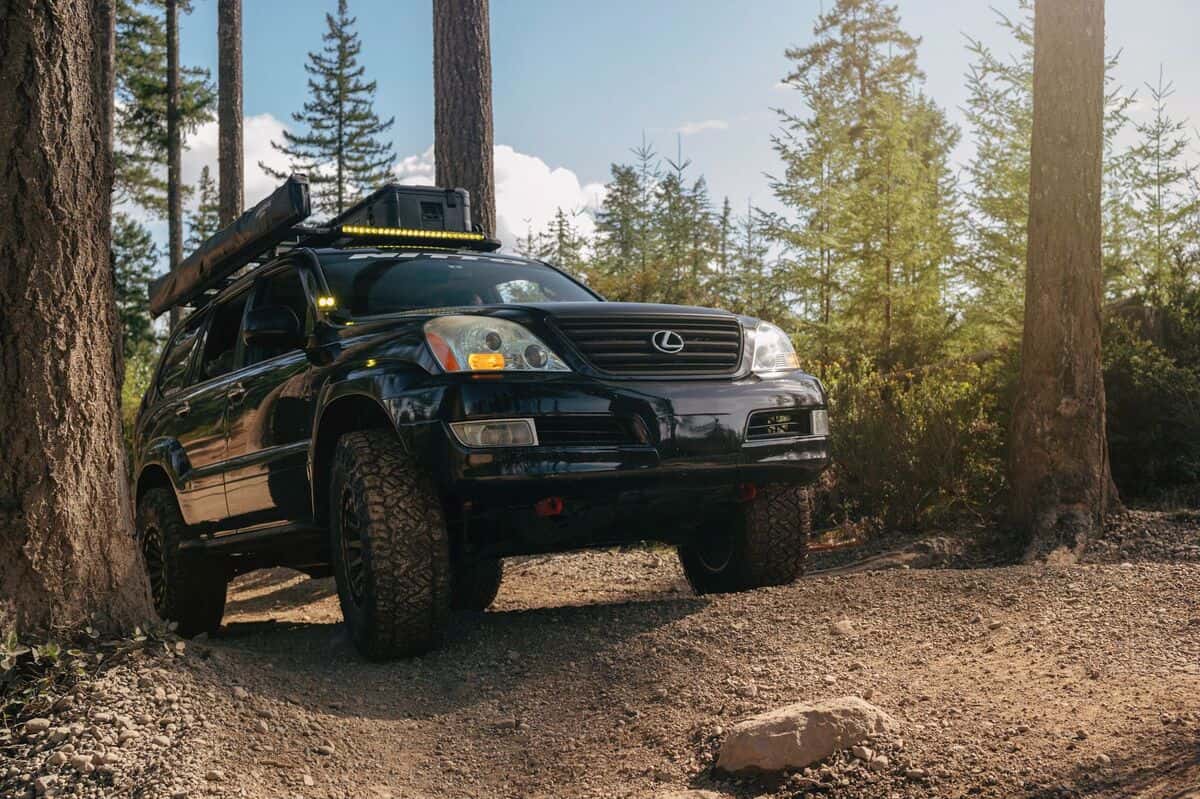
A lifted GX can look right and still not handle well. If your alignment tech is fighting caster, the front end feels nervous on the highway, or the suspension tops out hard off-road, the weak link is often sitting right above the spindle. Lexus GX upper control arms are not just a supporting part in a lifted setup - they are a geometry correction part, a durability upgrade, and in many cases the difference between a build that works and a build that only looks the part.
Why Lexus GX upper control arms matter on a lifted GX
The factory arm was designed around factory ride height, factory alignment range, and factory wheel travel. Once you add front lift, that geometry changes fast. Ball joint angle increases, caster can become harder to recover, and suspension travel can run into the limits of the stock arm sooner than most owners expect.
That is where aftermarket upper control arms earn their keep. A well-designed arm repositions the ball joint to work at lifted ride height, gives the alignment shop more usable range, and allows the front suspension to cycle with less bind. On a GX that sees highway miles during the week and dirt, rocks, or washboard on weekends, those changes are not theoretical. They show up in steering feel, tire wear, front-end noise, and how much confidence the truck gives you when the trail turns rough.
The GX platform is especially sensitive to this because many owners build them in the sweet spot between daily driver and trail rig. They are not building a trailer queen. They want 2 to 3 inches of front lift, a larger tire, armor, camping load, and a truck that still tracks straight at 75 mph. That combination puts real pressure on the front suspension to do more than Lexus originally asked of it.
What goes wrong with stock arms after a lift
The first problem is alignment range. A lifted GX often needs more caster than the stock arm can comfortably deliver. When caster is marginal, the vehicle can feel twitchy, especially with heavier tires. It may wander more, respond poorly to crosswinds, and lose that planted feel you want on a long road trip.
The second issue is ball joint operating angle. As lift height increases, the stock ball joint works closer to its limit. That can mean reduced droop travel and more stress on the joint itself. On-road, that may translate into a harsher feel over sharp transitions. Off-road, it can mean the suspension reaches a hard limit sooner, instead of moving through travel cleanly.
The third issue is strength and service life. Factory-style components are built around factory use. Add larger tires, rough terrain, extra unsprung weight, and repeated full-droop events, and wear accelerates. Not every GX owner needs a heavy-duty upper arm, but if the truck regularly sees trail abuse, washboard roads, or miles with added load, stronger and more serviceable hardware starts to make a lot of sense.
What better upper control arms actually change
A proper aftermarket arm is not magic. It simply addresses the geometry and durability problems created by lift. That usually starts with corrected ball joint positioning. By changing where the ball joint sits in relation to the arm, a lifted GX can maintain safer operating angles and regain usable travel.
The next improvement is alignment authority. More caster adjustment matters because it gives your alignment tech room to get the numbers where they need to be, instead of settling for barely acceptable settings. That is one of the biggest differences drivers notice after the install. The truck feels calmer, more centered, and less busy on the highway.
Then there is bushing and joint quality. This is where design separates serious suspension parts from generic catalog parts. Better bushings can reduce deflection without beating up ride quality. Better ball joints can handle abuse without turning into a maintenance headache. Serviceability matters too. A rebuildable or greaseable design can outlast throwaway parts and make more sense for owners who keep their rigs for years.
Choosing Lexus GX upper control arms for your kind of build
Not every GX uses the front suspension the same way, so the right arm depends on the truck.
If your GX is a daily-driven overland build with moderate lift, you want quiet operation, solid alignment correction, and parts that do not constantly ask for attention. If your truck sees difficult trails, faster desert-style terrain, or repeated articulation, joint strength and travel become a bigger priority. If you tow or carry armor, recovery gear, and camping weight, durability under sustained load matters more than flashy looks.
This is where buyers get tripped up. They shop upper control arms like they are cosmetic parts or they compare only by price. The smarter way is to ask what the arm does at ride height, at full droop, and after thousands of miles in dirt, rain, and heat. An arm that looks aggressive but uses weak joints, poor-quality bushings, or generic geometry can still leave you with the same problems you were trying to solve.
Ball joints, bushings, and serviceability
For a GX that actually gets used, ball joint design is not a side note. It is central to how the arm performs over time. A stronger ball joint housing, better articulation range, and better sealing all matter when the suspension is cycling hard and seeing mud, dust, and water crossings. The joint should be capable of handling the angle demands of a lifted suspension without becoming the failure point.
Bushings deserve the same attention. Too soft, and the front end can feel vague. Too harsh, and every bump starts talking back through the chassis. Good upper control arms strike the balance between control and ride quality. They should stay quiet, resist slop, and survive real use without turning the front suspension into a squeak machine.
Serviceability is where premium designs separate themselves. If the arm is built with replaceable wear components and maintenance-friendly features, ownership gets easier over the long haul. That matters for GX owners who travel far from home and do not want to treat suspension parts like disposable items.
Lift height, tire size, and the "it depends" factor
There is no single answer for every GX because setup matters. A mild front lift on stock-size or near-stock tires puts less demand on the arm than a heavier truck on 33s with aggressive offset. Add steel bumpers, skids, a winch, and cargo, and the whole front suspension has to work harder.
That is why the right answer is usually tied to the full package, not just the part number. Spring rate, shock length, wheel backspacing, and intended use all influence which upper control arm makes sense. Some GX builds need maximum droop and articulation. Others need stable road manners with enough correction to keep the alignment in check. The best suspension decisions come from looking at the system as a whole.
Installation and alignment expectations
Upper control arms are not usually the hardest part of a GX front suspension install, but they still need to be installed correctly. Torque specs matter. Grease points matter. Clearance checks matter, especially with certain wheel and tire combinations. If the truck has seen winter salt or years of use, removing old hardware can take more effort than the new install itself.
After installation, alignment is mandatory. Not optional. Even the best arms will not fix a poorly aligned front end. Once properly aligned, many drivers notice the same pattern: better straight-line tracking, improved return to center, less nervous steering, and a front suspension that feels more composed when the terrain gets uneven.
When upgraded upper control arms are worth it
If your GX is staying near stock height and spending almost all of its life on pavement, upgraded arms may not be urgent. But once you lift the front, add tire, or expect real off-road travel, the equation changes. At that point, upper control arms move from nice-to-have to foundational hardware.
They are worth it when the goal is not just to clear a tire, but to preserve drivability and gain confidence. They are worth it when you are tired of living with compromised alignment or front-end parts that wear out too fast. And they are worth it when you would rather buy a purpose-built solution once than keep chasing symptoms with cheaper parts.
For GX owners who care how the truck performs under load, at speed, and deep into a trail day, the right upper control arm is one of the smartest suspension upgrades on the vehicle. JBA Offroad has built its reputation on that exact idea - geometry first, durability always, and serviceable design that works in the real world.
Build your GX for how you actually use it, and the front suspension will stop feeling like a compromise.