
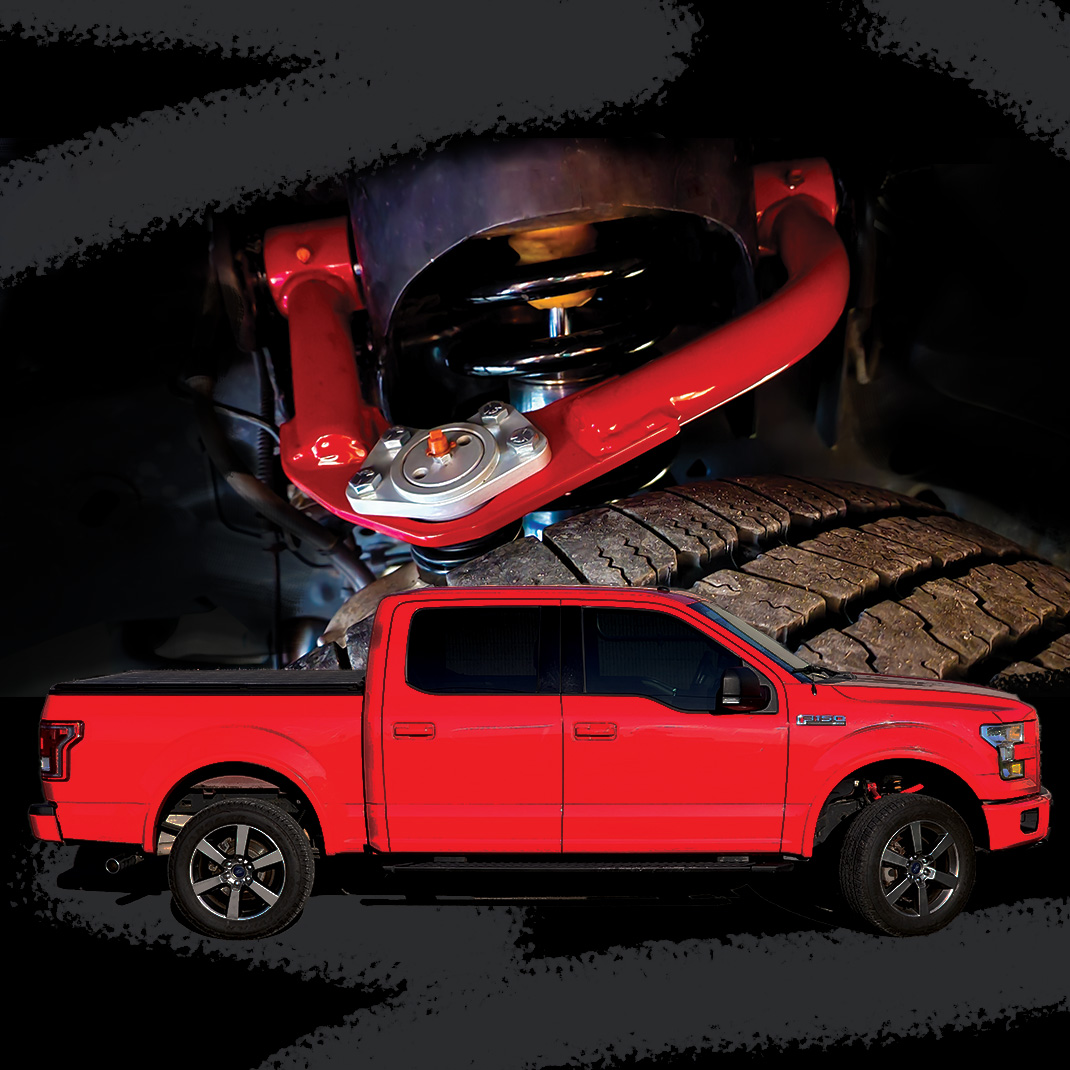
A Ford truck with a leveling kit can look right in a single afternoon. The problem shows up later - stiff droop, sketchy ball joint angles, uneven tire wear, and front-end parts that start complaining long before they should. That is why ford upper control arms for leveling kit setups are not some cosmetic add-on. They are often the part that keeps a leveled truck driving like a truck instead of a compromise.
Most Ford owners level the front for a simple reason. They want room for a bigger tire, better stance, and more ground clearance without jumping to a full suspension lift. On paper, that sounds straightforward. In practice, even a modest front lift changes control arm angle, ball joint position, alignment range, and available suspension travel. Those changes are exactly where the factory upper control arm starts running out of room.
Why factory arms struggle on a leveled Ford
The stock upper control arm on many Ford trucks was designed around stock ride height and stock geometry. Once the front end comes up, the arm sits at a different angle through the suspension cycle. That can push the ball joint closer to its operating limit, especially at full droop. The higher the front sits, the less margin you have.
That matters on the street and off road. On pavement, poor geometry can show up as vague steering feel, alignment trouble, and accelerated wear on ball joints and tires. Off road, it gets worse. When the suspension extends over uneven ground, a stock-style arm can bind earlier and limit articulation. Instead of using the suspension the way you intended, the truck starts topping out harshly or riding on stressed components.
Not every leveling kit creates the same problem. A mild spacer on a truck that stays mostly on-road may get by with stock arms for a while. But the moment you add more front lift, heavier wheels and tires, or regular trail use, the upper control arm becomes a real weak point.
What good Ford upper control arms for leveling kit setups actually fix
A properly engineered aftermarket arm is not just there to clear a bigger tire or look tougher behind the wheel. Its real job is to correct the geometry that changed when you leveled the truck.
The biggest improvement is ball joint operating angle. A quality arm repositions that angle so the joint can cycle more naturally at the truck's new ride height. That helps reduce binding at droop and gives the suspension a better chance to use available travel without beating up the joint.
The second improvement is alignment range. On leveled Fords, getting caster and camber back where they should be can become more difficult with stock arms. An aftermarket design built for lifted applications gives the alignment shop more room to work with. That usually translates to better straight-line stability, cleaner tire wear, and less steering correction at highway speed.
Then there is durability. A leveled truck often gets pushed harder than stock, even if the owner says it is just a daily. Bigger tires add leverage. Rough roads add impact. Off-road washouts add repeated extension and compression cycles. A purpose-built upper control arm uses stronger materials, better bushings, and a ball joint designed for abuse rather than stock-height commuting.
The difference between a spacer truck and a sorted truck
A lot of Ford owners install a front leveling puck and call it done. That approach is popular because it is cheap and fast. But a spacer does not improve suspension geometry. It only changes ride height. The stock upper control arm still has to live with the new angle.
That does not mean every spacer kit is bad. It means the rest of the front suspension has to match the new working range. If you want the truck to perform as well as it looks, the upper control arm should be part of the conversation from the start.
A sorted truck feels different. It tracks straighter. It absorbs rough surfaces without the front end feeling nervous. It has better droop control off road. And when you inspect the suspension later, you are less likely to find torn boots, noisy joints, or signs that the front end has been operating on borrowed time.
Choosing Ford upper control arms for leveling kit use
Fitment is everything. Ford platforms vary by generation, suspension design, and intended lift height. An arm that works well on one truck may not be the right solution for another. You need to match the control arm to the specific Ford platform and the actual amount of front lift, not the marketing estimate on the box.
Ball joint design is one of the first things worth evaluating. For a leveled truck, you want a joint with enough angular range for the new suspension geometry and enough strength to handle larger tires and off-road shock loads. A premium high-angle ball joint is a major upgrade over a generic replacement-style joint, especially if the truck sees trail use or repeated full-droop situations.
Bushing design matters too. Cheap bushings can squeak, deflect excessively, or wear out early when exposed to dirt, water, and constant movement. A better bushing setup keeps the arm moving freely while staying quiet and serviceable over the long haul. For owners who actually use their trucks, serviceability is not a small feature. It is the difference between maintaining a part and replacing it.
Material and weld quality should not be overlooked. This is a front suspension component that deals with steering loads, impact loads, and constant cycling. Tube quality, bracket thickness, weld consistency, and ball joint cup construction all matter when the truck is loaded down or pointed at rough terrain.
What leveled Ford owners should expect after the upgrade
The first thing most drivers notice is confidence. The truck feels less nervous over dips and expansion joints, and the steering feels more planted at speed. That comes from better geometry and better control through the suspension's travel range.
The second thing is durability under real use. If you run larger tires, tow occasionally, or spend weekends on dirt and rock, the front suspension sees much more stress than stock. A quality upper control arm is designed to take that punishment without becoming a maintenance headache.
There is also a ride quality benefit, but it depends on the rest of the setup. Upper control arms do not magically fix a bad shock or an overly stiff front spacer. What they can do is let the suspension move more naturally within the geometry you now have. When paired with quality shocks and a sensible leveling height, the result is a cleaner, quieter, more controlled front end.
Trade-offs that matter
There is no serious suspension upgrade without trade-offs. Cost is the obvious one. A premium upper control arm costs more than keeping the stock arm in place. But that comparison only holds if you ignore tire wear, alignment issues, and premature component failure down the road.
The other trade-off is honesty about how the truck is used. If your Ford will never leave pavement and the leveling kit is very mild, an aftermarket arm may not feel urgent on day one. If you run aggressive tire sizes, drive fast on rough roads, or flex the front suspension off road, it becomes much more important. The harder the use, the less sense it makes to trust a stock arm at a lifted angle.
Some owners also assume any aftermarket arm will do the job. That is a mistake. Generic arms built around price can still suffer from poor joint quality, limited travel, or noisy bushings. A control arm should be engineered for lifted geometry first, not just sold into that category.
Why serious Ford builders do this once and do it right
A leveling kit changes more than appearance. It changes the way the front suspension lives every mile after the install. If you are going to raise the nose of a Ford and ask it to carry bigger tires, hold alignment, and survive off-road abuse, the upper control arm needs to be part of that plan.
That is why companies like JBA Offroad build arms around real-world lifted use, not stock-height assumptions. Features like serviceable bushings, high-angle ball joints, and suspension geometry built for leveled and lifted trucks are not marketing extras. They are the difference between parts that tolerate the new setup and parts that were made for it.
If your Ford is getting leveled, think beyond the stance. Build the front end to handle the height you are adding, and the truck will reward you every time the road ends.