
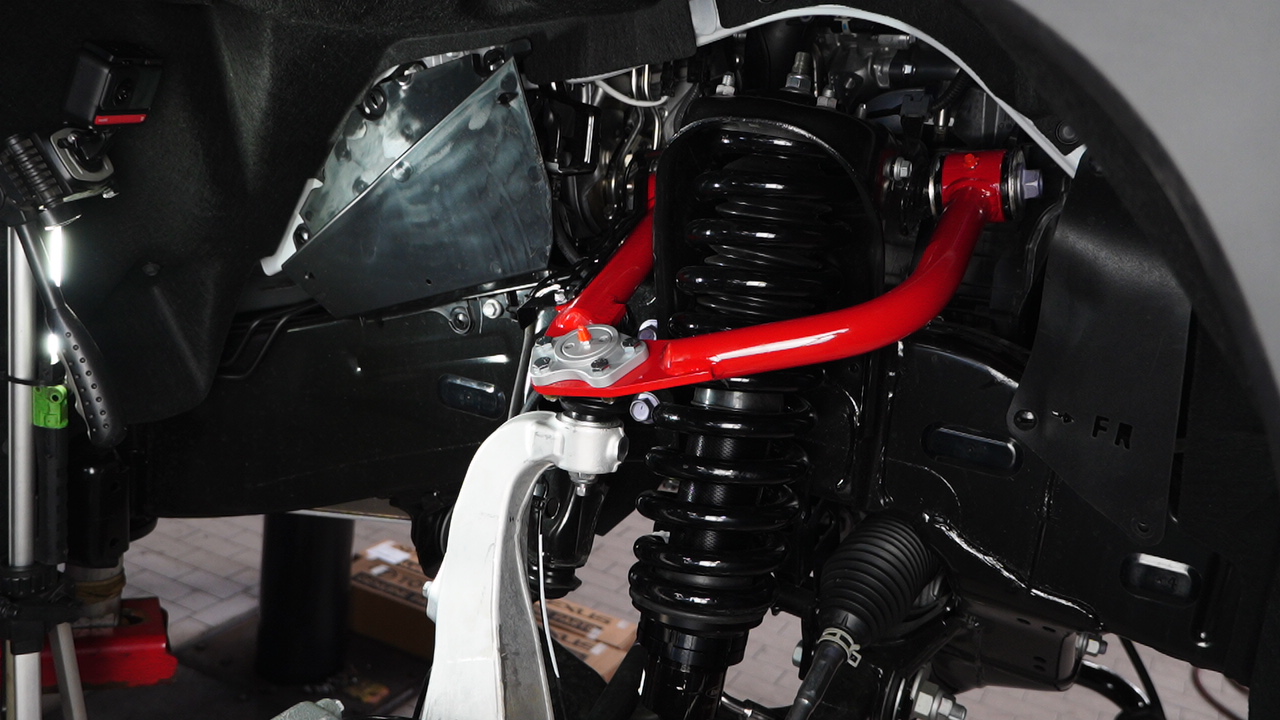
A lifted Tundra can look right and still drive wrong. If your front end feels nervous on the highway, tops out over sharp hits, or chews through ball joints after the lift, the weak point usually is not the shock - it is the geometry. That is exactly where tundra upper control arms lifted for real suspension travel earn their keep.
Factory upper control arms were designed around stock ride height, stock alignment range, and stock operating angles. Add lift, larger tires, and more aggressive use, and you push that factory arm into a job it was never built to handle. Some trucks get away with it for a while. Others start showing the usual signs fast - limited droop, alignment struggles, premature wear, and that vague front-end feel that makes a built truck feel cheaper than it should.
Why lifted Tundras need better upper control arms
When you lift the front of a Tundra, you change more than fender gap. The spindle position changes relative to the frame, which affects the upper ball joint angle, caster, camber curve, and droop travel. On a mild leveling kit, the stock arm may survive. On a true lifted setup, especially with larger tires and off-road use, it becomes a compromise.
The first issue is angle. A stock-style ball joint can run near its limits once the suspension sits higher than intended. That creates added stress at ride height, not just at full extension. The second issue is clearance. As the suspension cycles, the arm and coil bucket relationship gets tighter, and the truck can run out of usable travel before the shock does. The third issue is alignment. Lifted Tundras often need more caster correction than the stock arm can comfortably provide, especially if the owner wants stable highway manners and better tire position in the wheel well.
A purpose-built upper control arm fixes those problems by changing the arm geometry, improving articulation, and giving the alignment shop more room to dial the truck in correctly. That matters on the road, and it matters even more when the front suspension is working hard off pavement.
What to look for in tundra upper control arms lifted setups
Not every aftermarket arm is built for the same kind of truck or the same kind of owner. Some are made to hit a price point. Some are built for appearance. A serious lifted Tundra needs an arm designed around actual suspension motion, not marketing photos.
Corrected geometry, not just a stronger shape
Strength matters, but geometry is the real reason to upgrade. A well-engineered arm repositions the ball joint so it operates within a healthier range at lifted ride height. That improves droop travel and reduces bind. It also gives the truck a more controlled feel instead of that topped-out, harsh sensation many owners blame on springs or shocks.
Real caster gains
A lifted Tundra with poor caster can wander, feel light in the steering wheel, and fight you on uneven pavement. Better upper control arms are designed to help recover caster after a lift. That is a performance upgrade, not just an alignment convenience. More usable caster generally means better straight-line stability and a cleaner steering return to center.
Tire and coil bucket clearance
Clearance gets overlooked until the truck rubs somewhere it should not. Depending on wheel offset, tire size, and suspension combination, upper control arm design can affect how much room you have around the tire and how much free movement the suspension has near the coil bucket. This is one of those areas where vehicle-specific design beats generic fitment every time.
Serviceable joints and bushings
A lifted truck that sees dirt, water, winter roads, and heavy miles should not be built around throwaway wear parts if you can help it. Serviceable bushings and rebuildable or high-quality ball joints make more sense for owners who plan to keep the truck and use it hard. Quiet operation matters too. Nobody spends money on suspension upgrades hoping for squeaks six months later.
The trade-offs depend on how your Tundra is used
There is no single perfect arm for every Tundra because there is no single perfect Tundra build. A truck running a modest front lift, stock-size tires, and mostly highway miles has different needs than a truck on larger tires with frequent trail time.
If your lift is mild and the truck stays on pavement, you may only notice the upgrade as better alignment stability and a smoother feel at full extension. If you are running heavier wheels and tires, added caster and stronger joint architecture become more valuable. If you use the truck off-road at speed or articulate it regularly on rough terrain, droop travel and joint operating angle move to the top of the list.
This is also where honest suspension planning matters. An upper control arm does not cover up a bad lift choice. If the coilover, preload setting, wheel offset, and tire size are poorly matched, the front end can still have issues. The arm should be part of a system, not a bandage.
How upper control arms change the way a lifted Tundra drives
The biggest difference most owners feel is control. Not fake stiffness. Not a harsher ride that gets mistaken for performance. Real control.
When the arm geometry is right, the suspension can use its travel more effectively. The front end is less likely to slam into its limit over abrupt drops or extension events. Steering feels more planted because the alignment can stay where it belongs. The truck tracks straighter, especially with larger all-terrain or mud-terrain tires that tend to amplify weak geometry.
Off-road, the benefit gets even clearer. Better articulation and reduced bind help the front suspension move instead of fighting itself. That means more composure over washboard, less drama when a wheel drops into a rut, and more confidence when the truck is loaded with gear. You are not just adding a stronger part. You are restoring function that gets lost when lift height outruns stock suspension design.
Common mistakes when choosing lifted Tundra UCAs
The first mistake is buying by appearance alone. Tubular arms can look aggressive, but appearance tells you nothing about ball joint angle, bushing quality, or alignment range. The second mistake is assuming every arm advertised for a lift performs the same. It does not. Small differences in pivot placement, joint design, and overall shape have a big effect on how the truck behaves.
The third mistake is ignoring maintenance strategy. Some owners want the lowest upfront cost and end up replacing non-serviceable parts more often. Others want a truck they can grease, inspect, rebuild, and keep running for years. Be honest about how you use the truck and how long you plan to own it.
The fourth mistake is treating fitment like a minor detail. Tundra generation, lift height, wheel specs, and tire size all matter. So does the intended use. A daily driven overland rig needs a different balance than a truck built to absorb repeated off-road hits.
Why quality matters more on a lifted truck
A stock-height truck can hide mediocre suspension parts for a while. A lifted truck exposes them fast. The loads are different, the angles are steeper, and the margin for slop is smaller. That is why premium engineering matters so much more once the suspension is pushed beyond factory conditions.
Good upper control arms are not just stronger than stock. They are built around the realities of lifted use - better articulation, durable joint design, dependable bushing performance, and geometry that supports alignment and travel instead of limiting them. That is the difference between a truck that feels sorted and one that always seems to have a front-end issue waiting around the corner.
For owners who care about long-term reliability, serviceability is not a side note either. Greaseable bushings, rebuildable wear components, and a design that is meant to be maintained can save money and frustration over the life of the truck. That matters even more if your Tundra sees trail dust, mud, road salt, or heavy towing miles.
JBA Offroad has built its reputation on that exact mindset - vehicle-specific upper control arms engineered for lifted applications, with serviceable components and geometry that works where stock parts fall short.
When should you upgrade?
If your Tundra is already lifted and showing bad manners, the answer is now. If you are planning a lift and want to do it once instead of chasing problems later, the answer is before the alignment headaches begin.
A good upper control arm upgrade makes the most sense when the truck has more ride height than stock, larger tires, or real off-road use in its future. It becomes even more important if you care about ride quality, front-end longevity, and getting the full value out of your suspension setup.
Build the front end around the way the truck actually gets used. If your Tundra is meant to drive farther, hit harder, and stay tight year after year, the right upper control arms are not an extra - they are part of doing the lift right.