
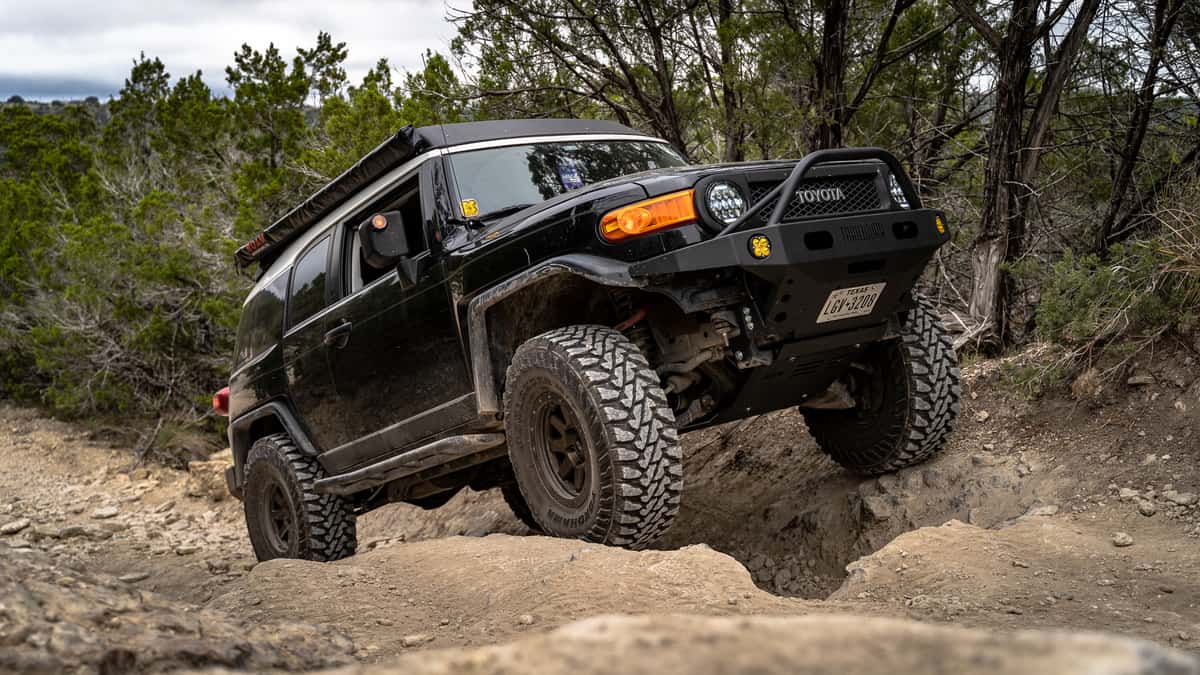
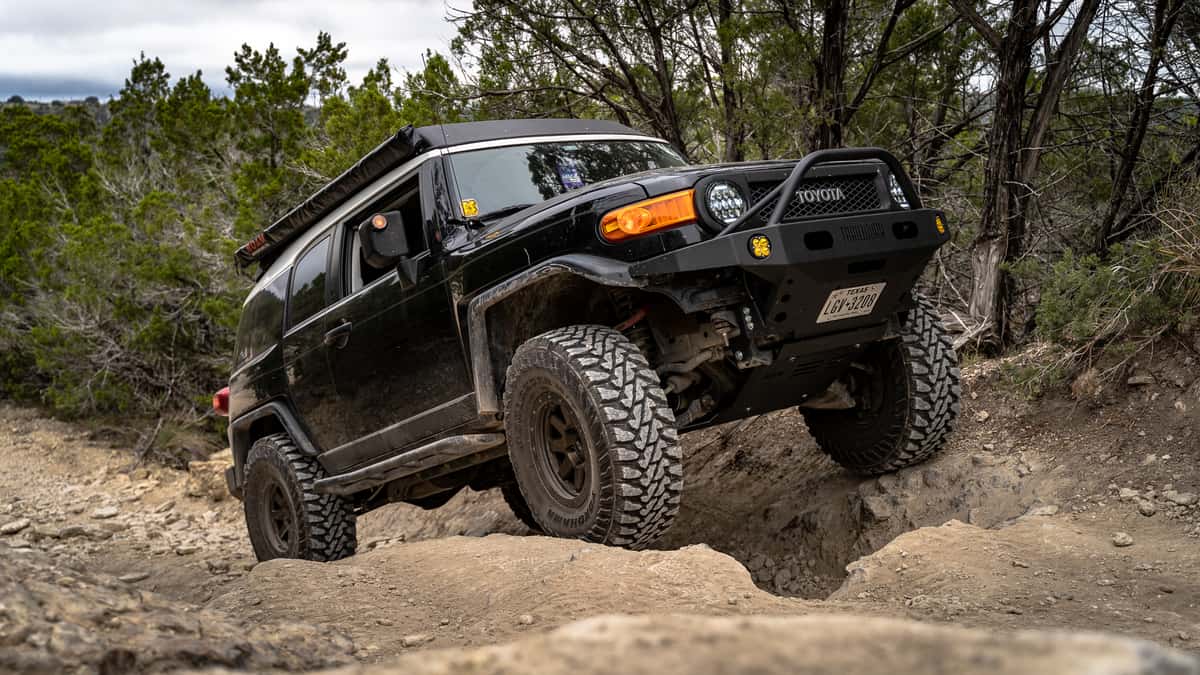
Off-road season puts stress on every suspension component. Small issues that go unnoticed on pavement, like loose hardware, worn joints, and poor alignment, can quickly become trail-ending problems once articulation, load, and terrain come into play. A little preparation now helps ensure trail-ready suspension, with fewer surprises later and more confidence every time you go off-track.
Trail-suitable suspension is built through smart inspections, proper setup, and understanding how your suspension works as a system. This is particularly important if your vehicle is lifted. Pre-season checks are one of the simplest ways to prevent trail failures, reduce unnecessary wear, and protect your investment before the dirt, rocks, and miles start adding up. This article takes you through everything you need to know to get ready to enjoy springtime off-roading.
Off-Road Alignment: Why It Matters More After a Lift
Off-road alignment isn’t just a checkbox after installing a lift; it’s a must for safe, predictable handling. Lifting a vehicle changes suspension geometry, especially caster and camber. When those angles drift out of spec, steering feel alters, tire wear accelerates, and straight-line stability reduces.
Many lifted vehicles rely on factory alignment ranges that simply weren’t designed for increased ride height. That’s where upgraded suspension components come into play. Correcting alignment after a lift helps:
-
Restore proper steering return-to-center
-
Improve highway stability and tracking
-
Reduce uneven tire wear
-
Maintain predictable handling on- and off-road
A trail-ready suspension starts with alignment that works with your lift, not against it. If your steering feels vague or your tires are wearing unevenly, alignment is telling you something important.
Suspension Inspection Checklist Every Off-Roader Should Follow
Before peak season begins, every build should go through a suspension inspection checklist. This isn’t about chasing perfection; it’s about identifying wear before it creates a bigger problem and potentially turns into failure.
Key areas to inspect:
-
Upper Control Arms (UCAs): Check bushings or joints for play, cracks, or binding.
-
Mounting hardware: Verify torque on all suspension bolts.
-
Shocks and struts: Inspect for leaks, damaged shafts, or loose mounts.
-
Ball joints and rod ends: Look for tears, corrosion, or excessive movement.
-
Springs: Check for sagging, cracks, or coil contact issues.
-
Sway bar links: Look for worn bushings or bent links.
If a component controls alignment, wheel movement, or load, it deserves attention. Trail-ready suspension setups hinge on reliability, not hope.
How to Prepare Your Truck for Off-Roading This Season
To truly prepare your truck for off-roading, think beyond individual parts. Suspension performance depends on how well all components work together under load, articulation, and speed.
Start by making sure your current setup matches how you actually use your vehicle. Consider which generally applies to your situation:
-
Daily driver with occasional or weekend trail use
-
Overland rig carrying consistent weight
-
Technical trail build focused on articulation
From there, focus on components that improve control and durability. Suspension upgrades should solve real problems, like alignment limitations after a lift, restricted wheel travel, or harsh ride quality. Adjustments shouldn’t introduce new issues.
Engineering-backed suspension parts help maintain geometry through the suspension cycle, keeping handling consistent whether you’re crawling rocks or cruising highways. That balance is what separates a regular lifted vehicle from a trail-ready one.
Spring Off-Road Prep That Improves Confidence and Control
Spring off-road prep is about setting the tone for the season ahead. After months of weather exposure and limited use, suspension components deserve a reset.
Smart spring prep includes:
-
Re-torquing suspension hardware after temperature changes
-
Rechecking alignment after winter wear
-
Lubricating serviceable joints and bushings
-
Inspecting tires for wear caused by misalignment
-
Confirming clearances at full droop and compression
To hit the trails, your suspension should feel composed, not unpredictable. When alignment is correct and components are tight, the vehicle responds consistently to steering input and terrain changes. That confidence translates directly into better control, reduced fatigue, and safer driving both on and off the tarmac.
Fewer Surprises, More Seat Time
A trail-ready suspension isn’t about chasing the newest part. It’s about preparation, inspection, and understanding how your suspension supports your goals. Alignment, inspection, and seasonal prep all work together to improve reliability, protect components, and keep your rig performing when it matters.
Do the work before the season starts and fix small issues early. Build your suspension around proven engineering and real-world use. The payoff is simple: fewer trail failures, better handling, and more time doing what your rig was built for. Shop JBA Offroad’s suspension collection, complete with a 100% satisfaction guarantee, for peace of mind and thorough preparation for outdoor adventures.