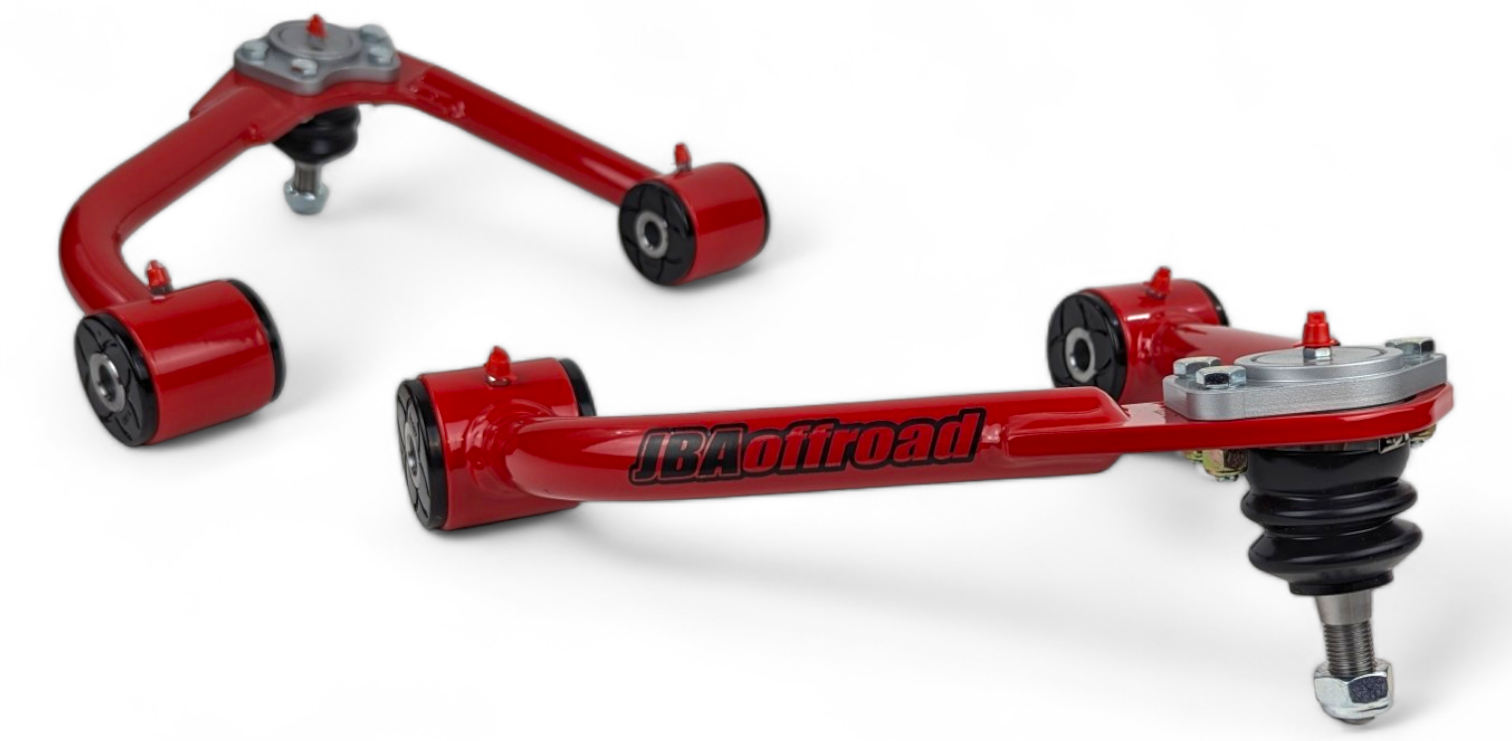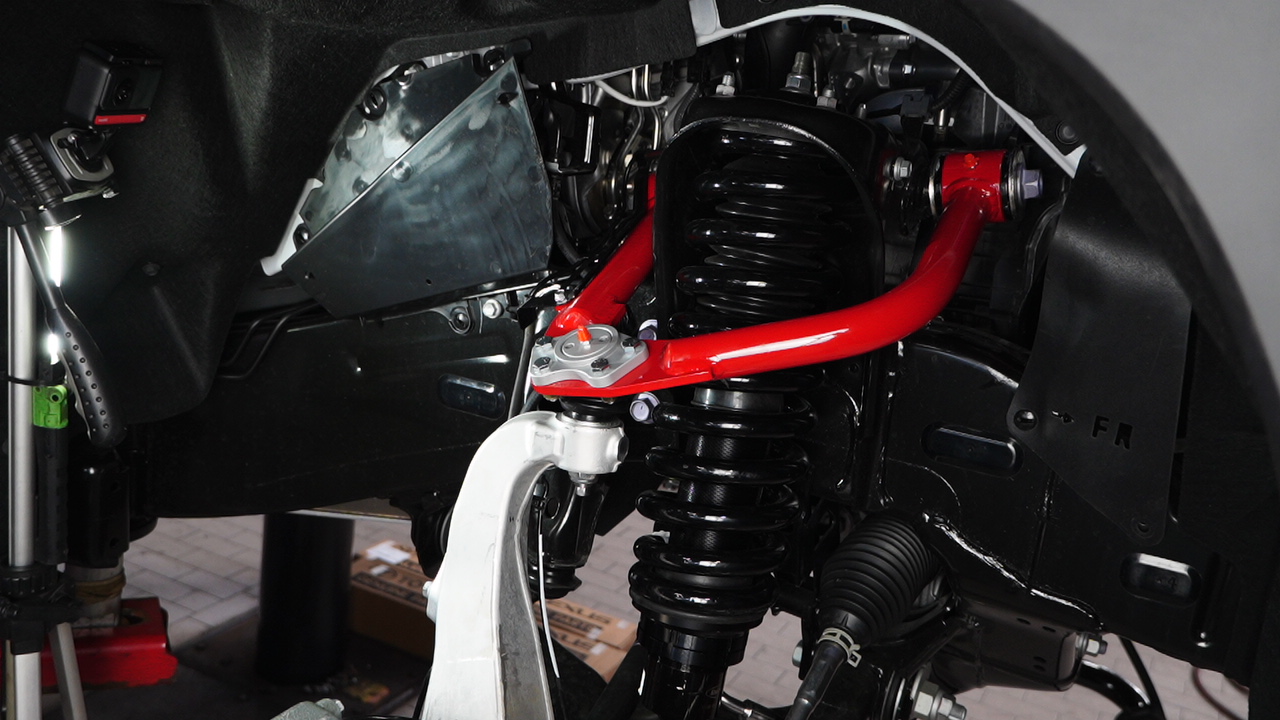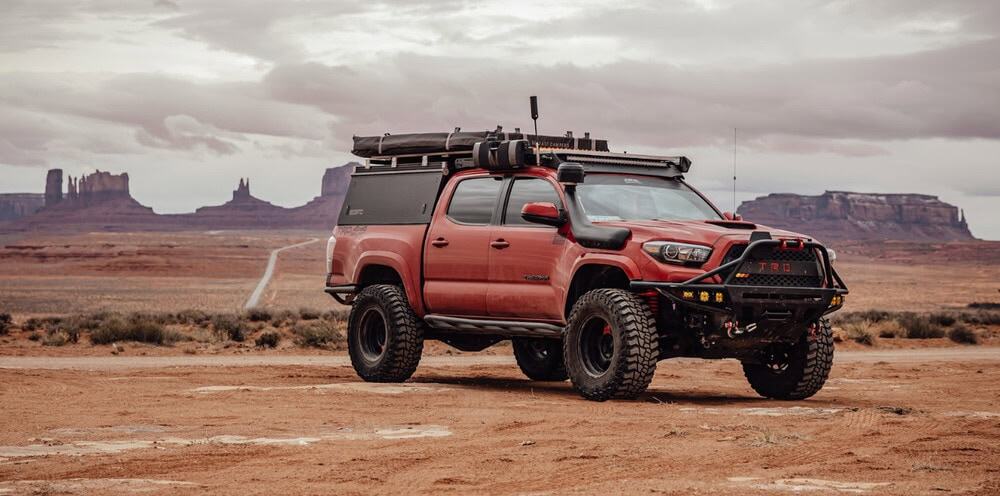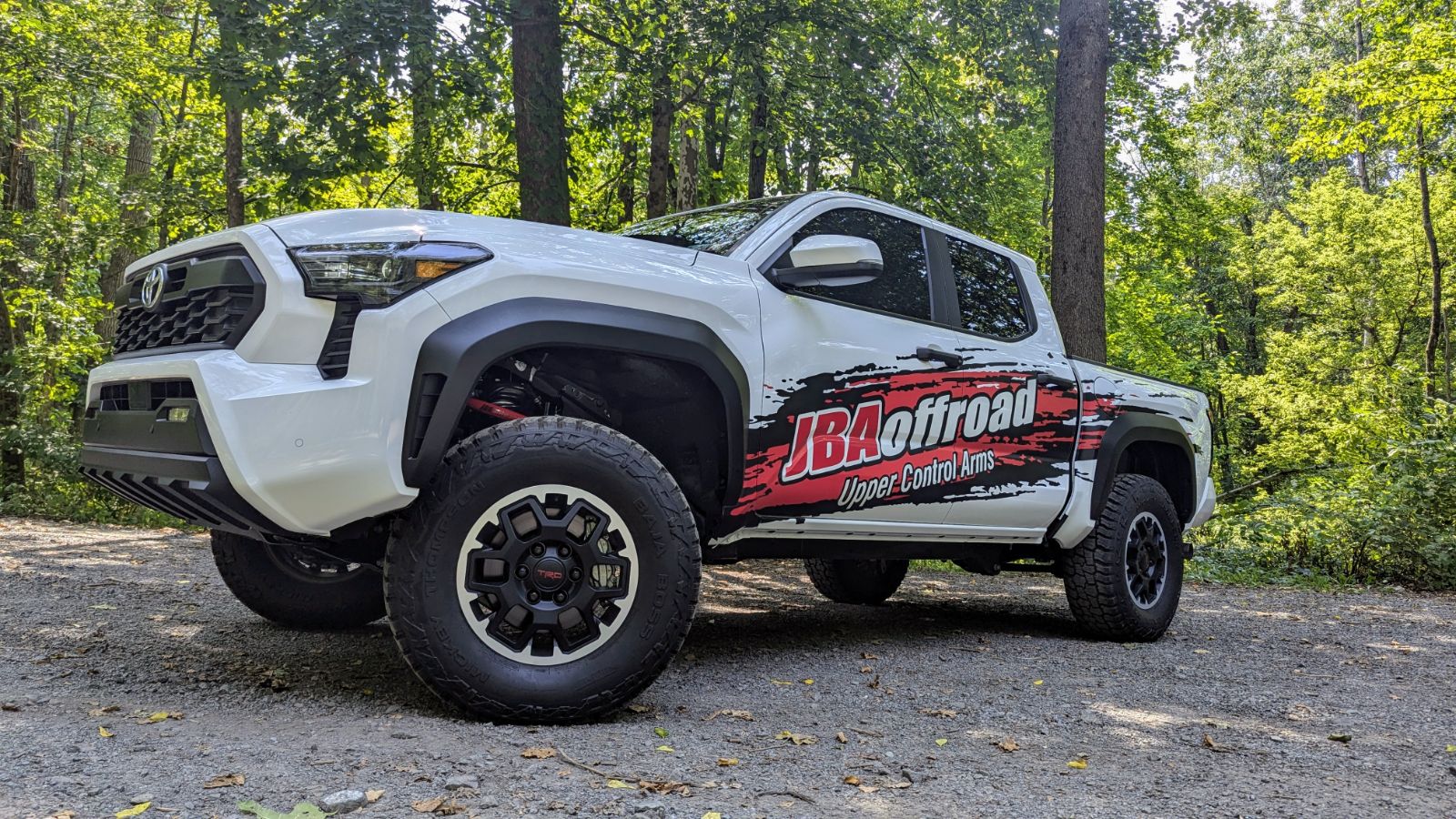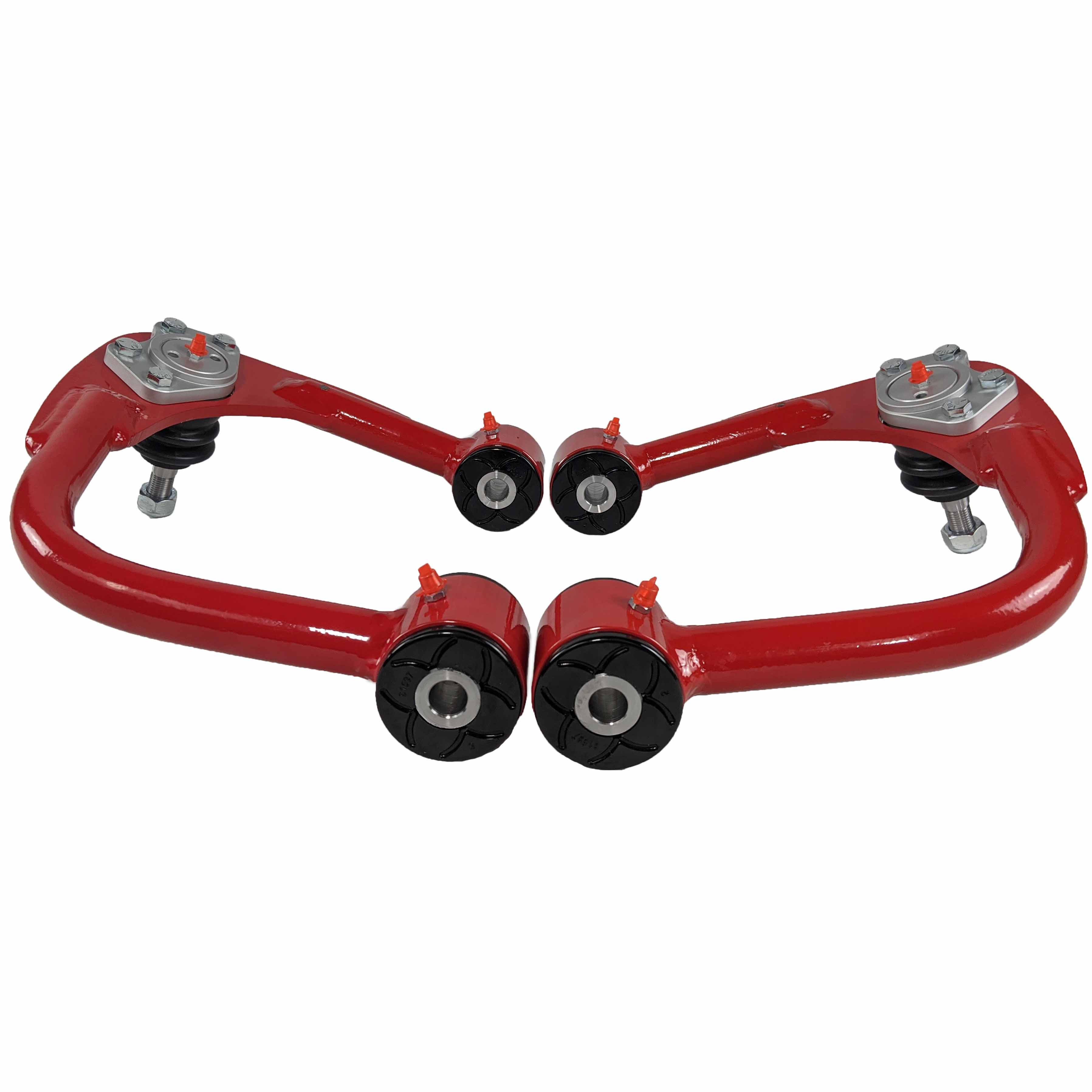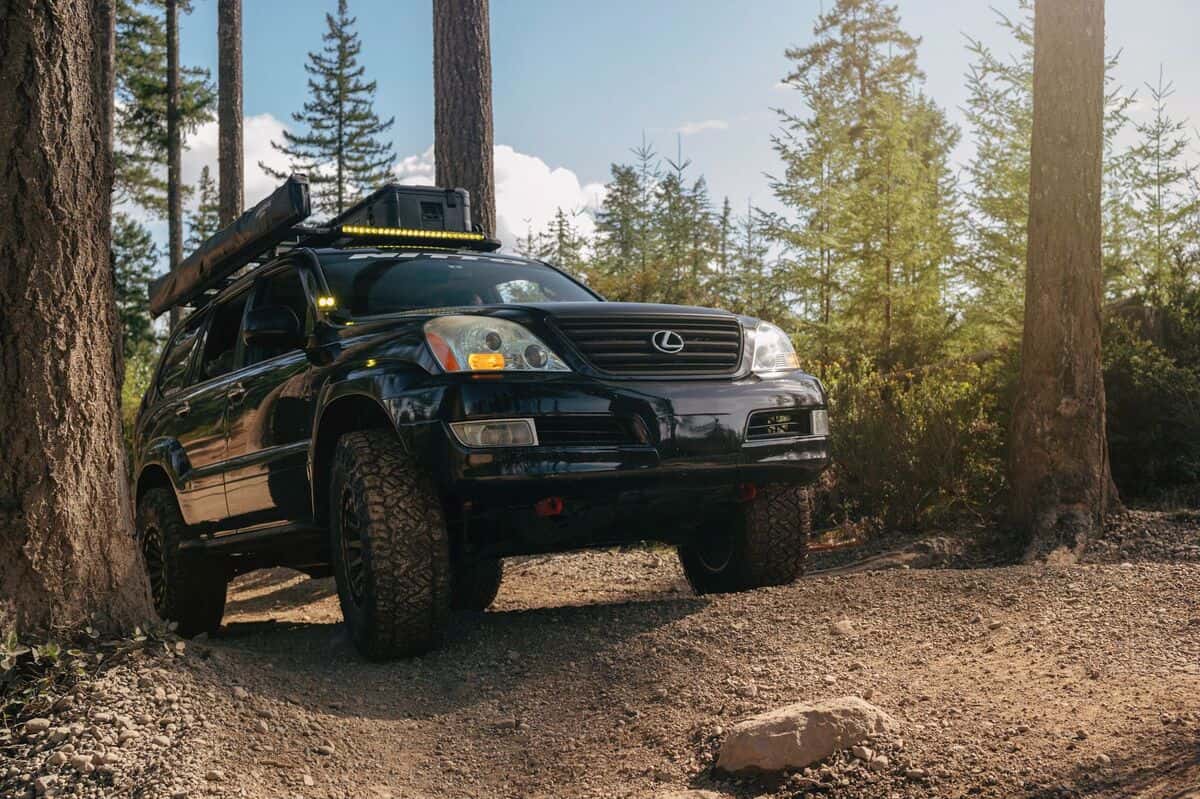

A Tacoma with a lift and stock upper control arms usually tells on itself fast. You feel it in vague steering, limited droop, uneven tire wear, or that nagging sense the front end is working harder than it should. If you're shopping for the best upper control arms for Tacoma, you're not really buying a cosmetic upgrade - you're correcting geometry, reclaiming articulation, and building a front suspension
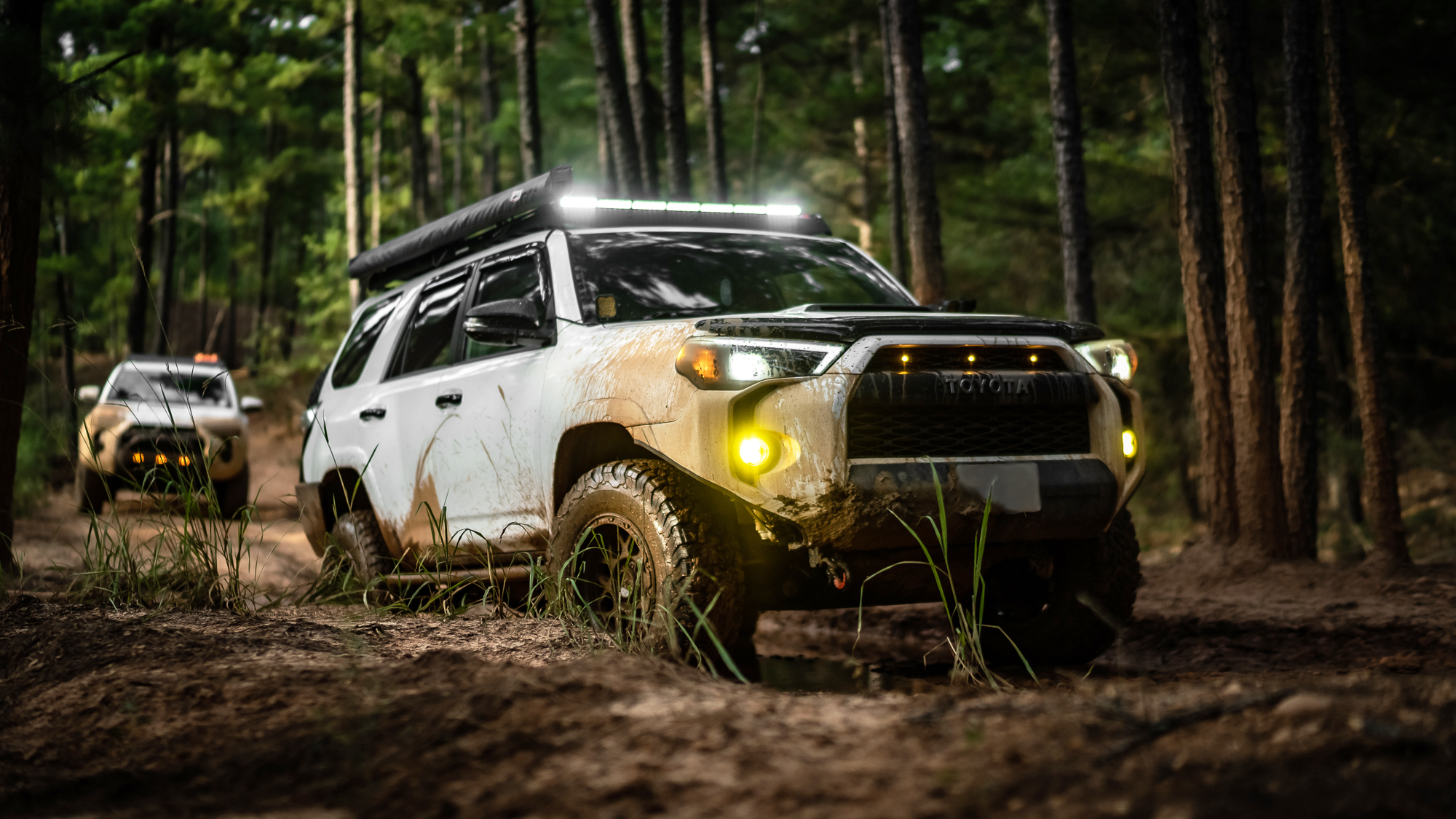
Lift a 4Runner an inch or two and the factory front end starts showing its limits fast. Alignment gets tighter, droop gets shorter, and the stock ball joint angle can end up working harder than Toyota ever intended. That is exactly why a 4Runner upper control arm upgrade becomes more than a cosmetic add-on - it is one of the parts that decides whether your lifted rig drives tight and tracks straight
You feel it before you measure it. The truck sits taller, the tires fill the wheel wells, and the stance looks right - but the front end starts telling a different story. Alignment gets touchy. Droop travel feels limited. Ball joint angles look sharper than they should. That is usually when the real question shows up: do lifted trucks need upper control arms?
You usually notice upper control arms when something starts feeling off - the front end wanders after a lift, alignment numbers get harder to hold, or the suspension tops out sooner than it should. That is when the question gets real: what do upper control arms do? On any independent front suspension truck or SUV, they are a major part of how the front suspension moves, how the wheel stays positioned,