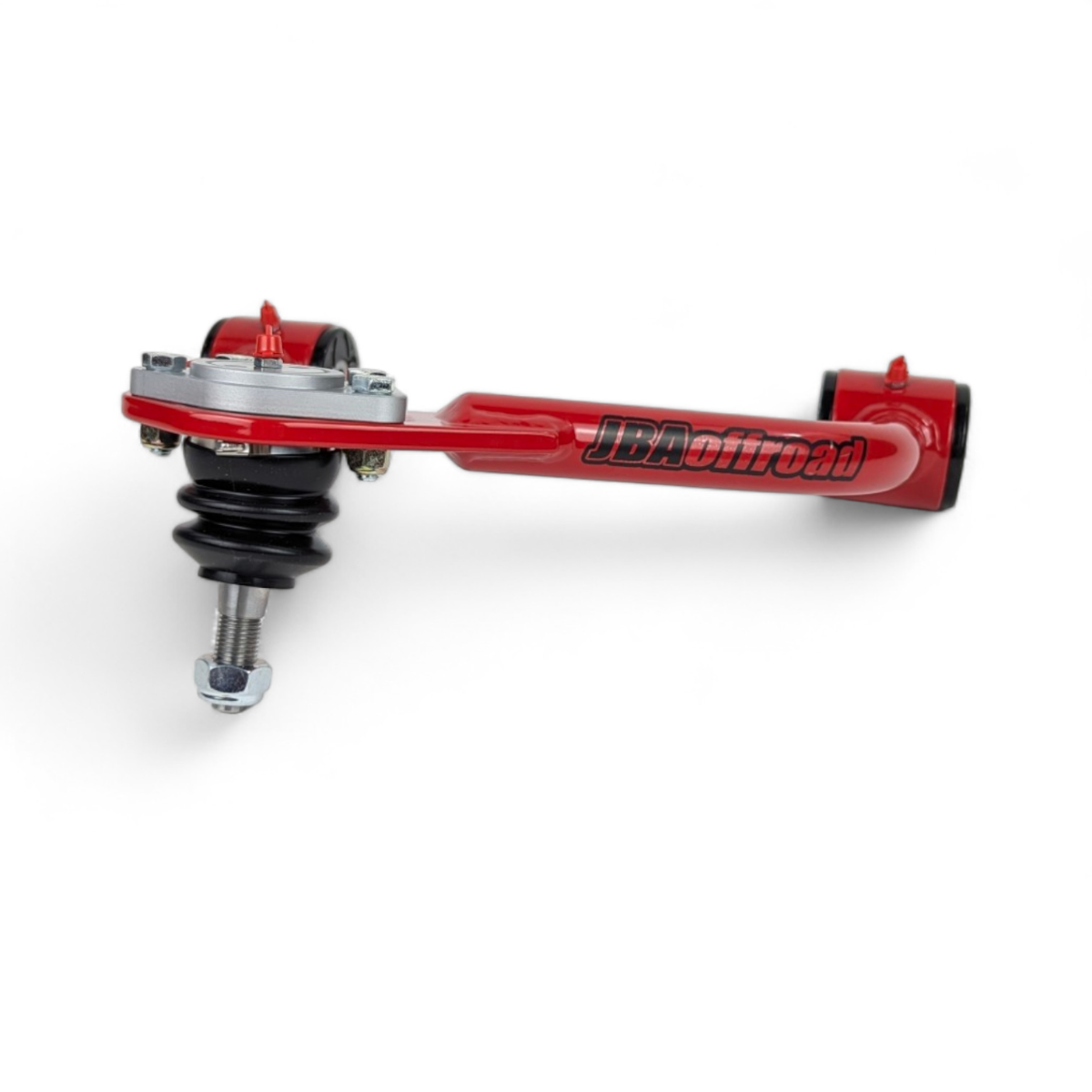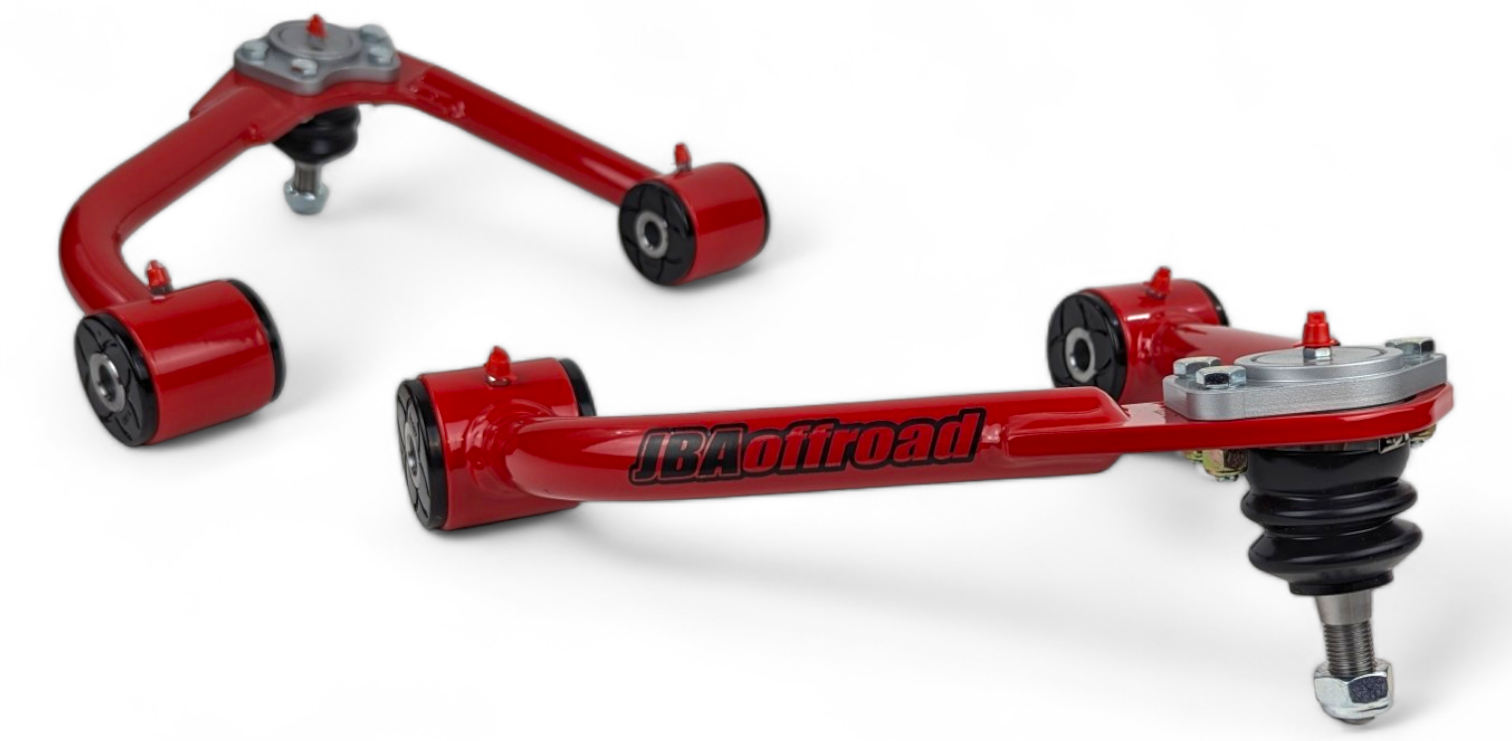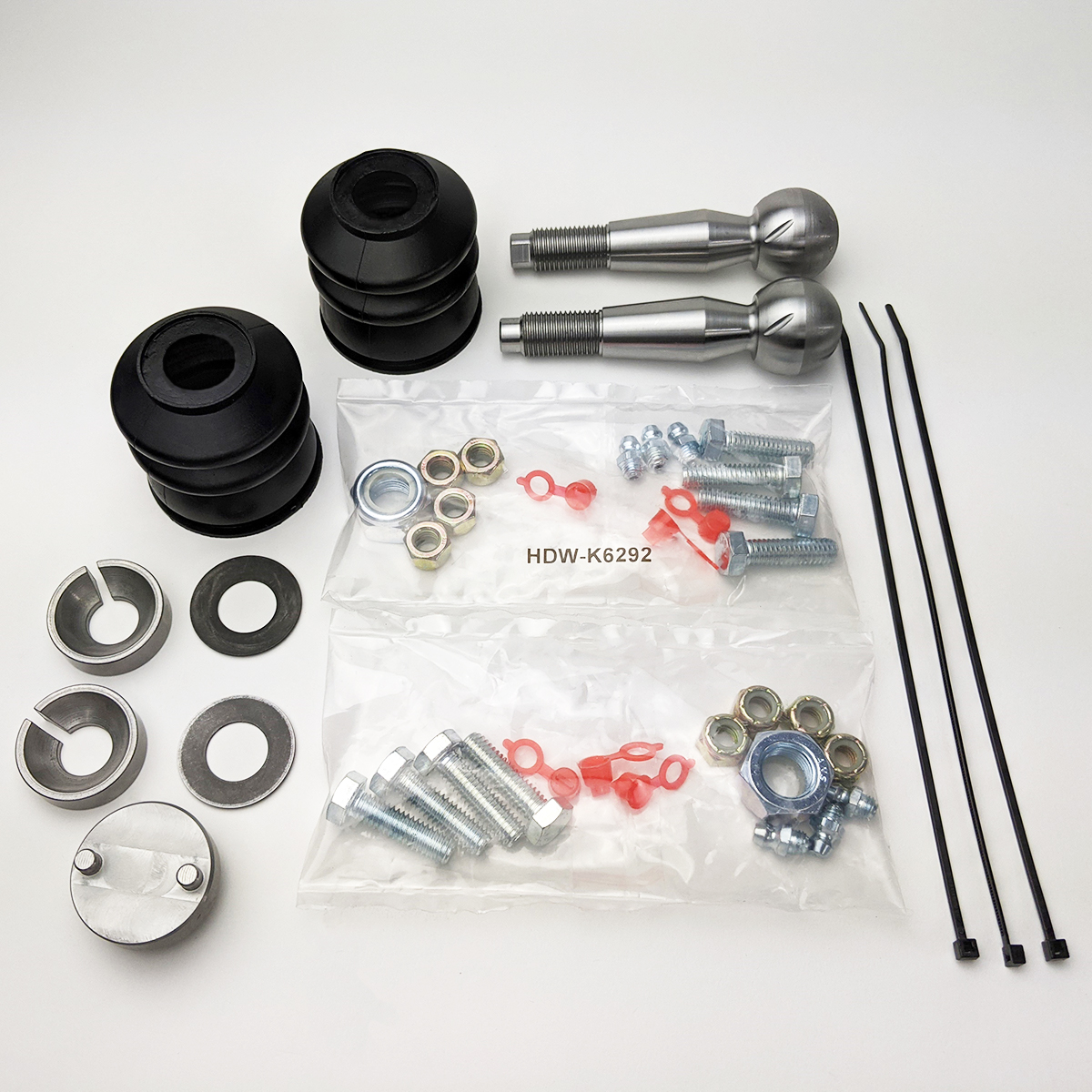

You feel it fast on a lifted truck. A little extra harshness over washboard. More feedback through the wheel. Maybe a front end that looks built for war but starts asking for attention sooner than expected. That is why the upper ball joint vs uniball debate matters. It is not just about what looks aggressive on a spec sheet. It is about how your upper control arms will handle miles, mud, angle change,
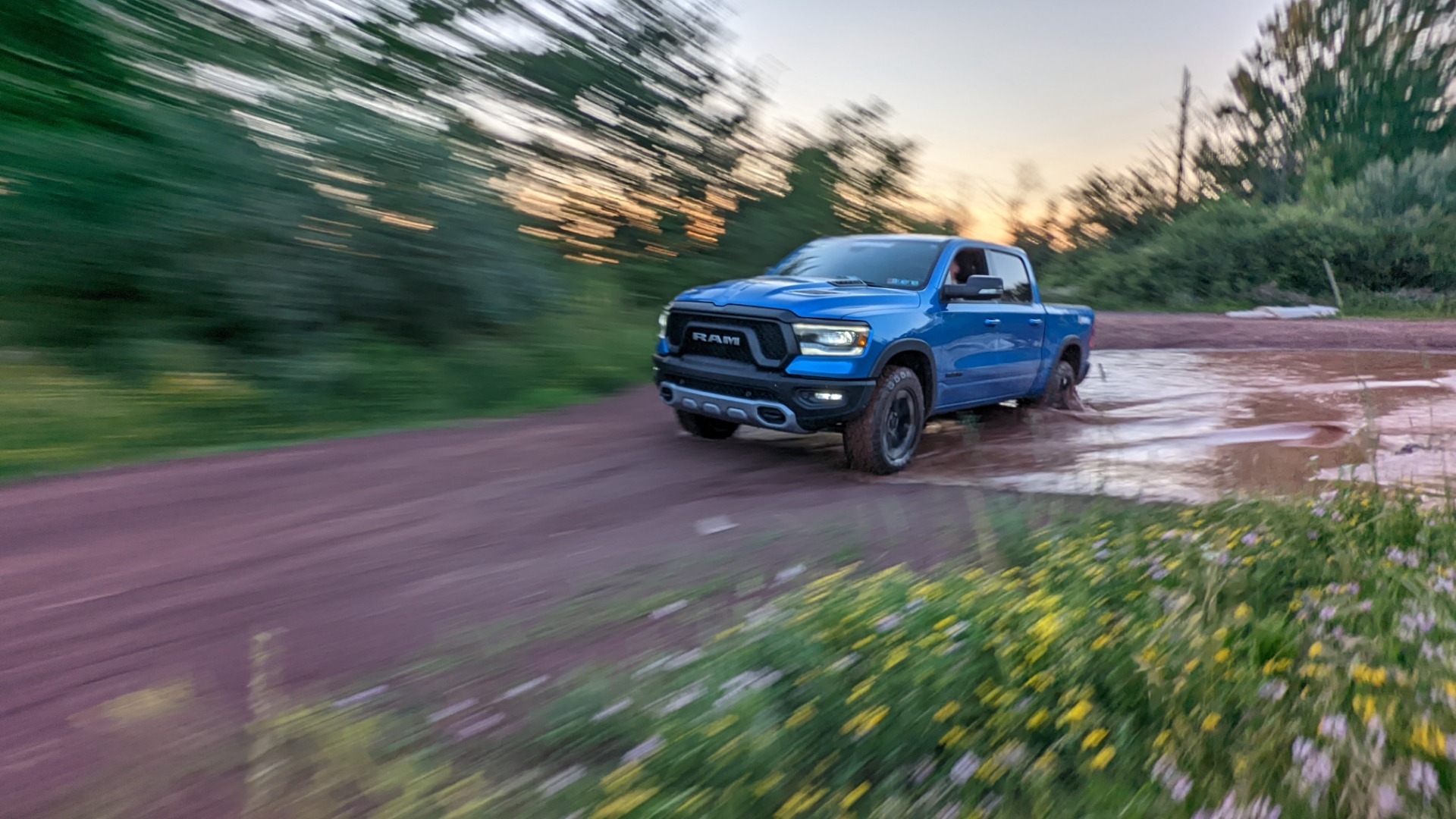
Lift your Dodge truck a couple inches and the factory front end starts showing its limits fast. That is where dodge upper control arms lifted truck setups stop being a cosmetic upgrade and start becoming a geometry fix. If your truck feels harsh over chop, tops out too easily, or chews through front-end parts after the lift, the upper control arm is usually part of the story.
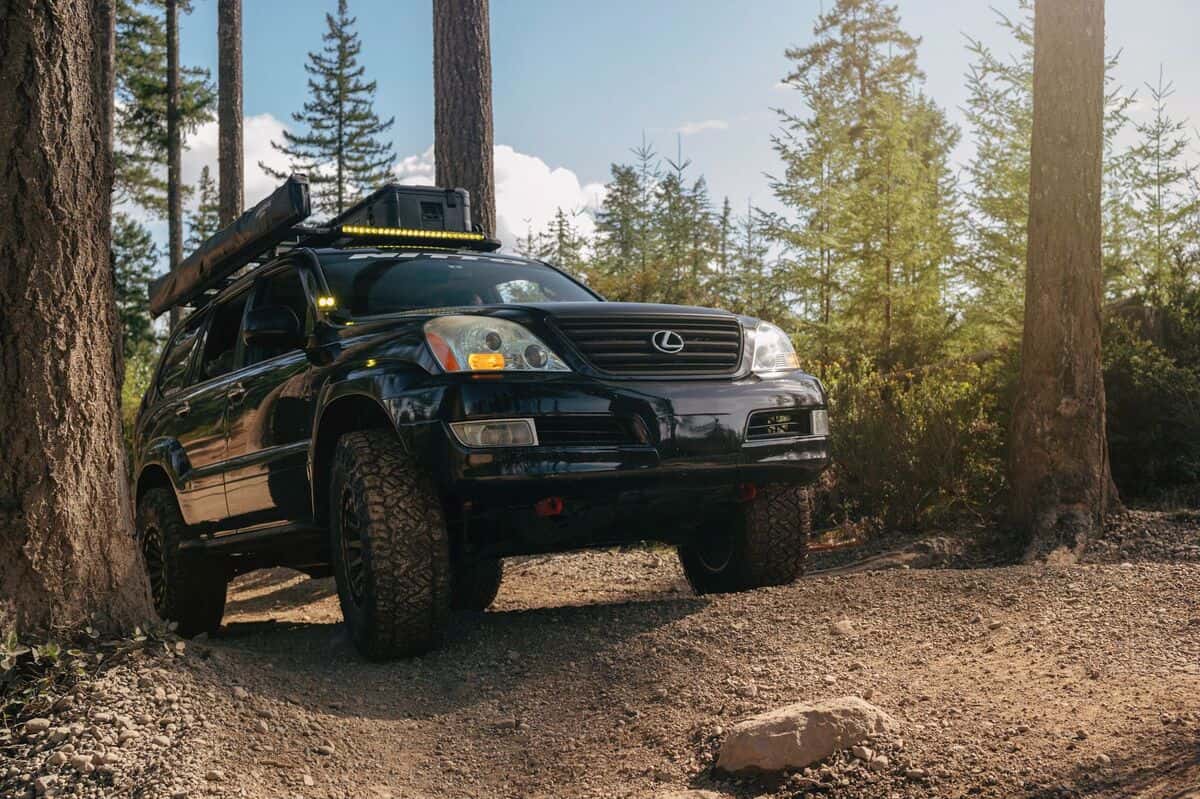
A lifted GX can look right and still not handle well. If your alignment tech is fighting caster, the front end feels nervous on the highway, or the suspension tops out hard off-road, the weak link is often sitting right above the spindle. Lexus GX upper control arms are not just a supporting part in a lifted setup - they are a geometry correction part, a durability upgrade, and in many cases the difference
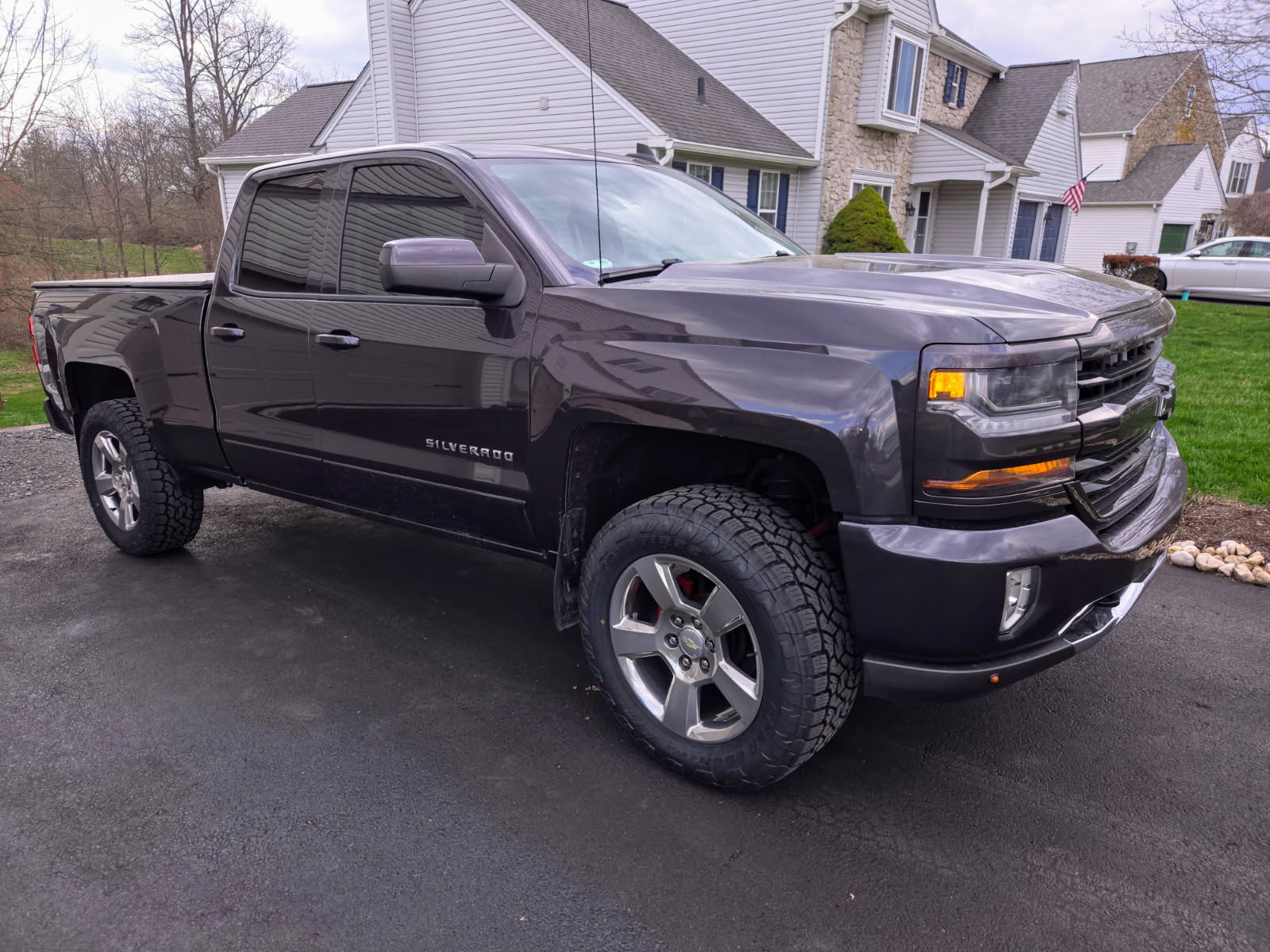
A Chevy that looks right on a lift but drives wrong on the trail usually has the same weak link - the front-end geometry was changed, but the control arms were not built to handle it. That is exactly why chevy upper control arms off road upgrades matter. Once ride height goes up, stock arms and generic replacements can run out of angle, lose travel, wear parts faster, and turn a capable truck into
What Is the Difference Between Upper and Lower Control Arms?
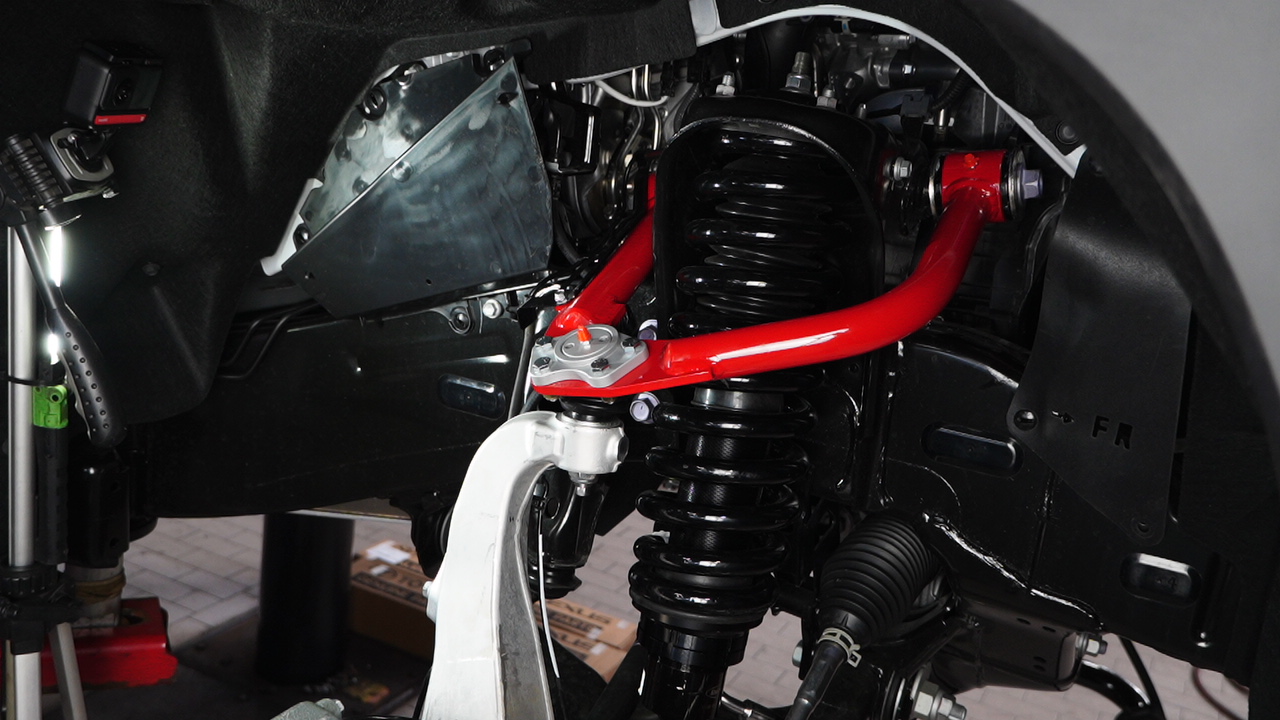
The upper control arm connects the chassis to the upper steering knuckle and primarily controls wheel alignment, camber angle, and suspension geometry during vertical motion. The lower control arm sits below the upper arm, attaches to the lower portion of the knuckle, and carries the majority of suspension load from the coil spring or torsion
What Are the Most Effective Chevy Colorado Suspension Upgrades?
The most effective Chevy Colorado suspension upgrades focus on upper control arms, dampers, and geometry-preserving lift kits. Factory Colorado suspension on WT and LT trims delivers 7.9 inches of ground clearance, while the Z71 reaches 8.9 inches and the Trail Boss hits 9.5 inches. The ZR2 tops out at 10.7 inches with Multimatic DSSV
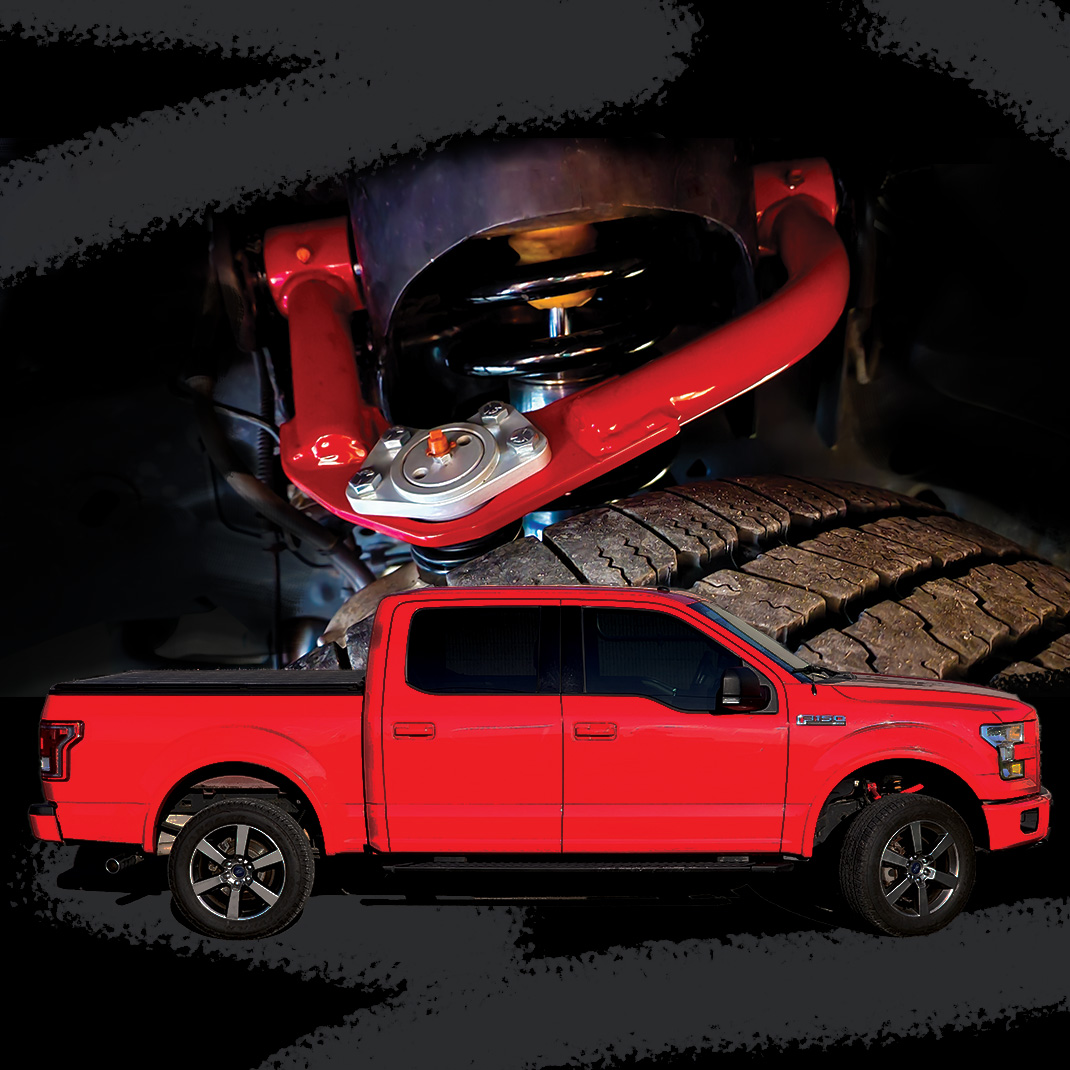
A Ford truck with a leveling kit can look right in a single afternoon. The problem shows up later - stiff droop, sketchy ball joint angles, uneven tire wear, and front-end parts that start complaining long before they should. That is why ford upper control arms for leveling kit setups are not some cosmetic add-on. They are often the part that keeps a leveled truck driving like a truck instead of a
A lifted Tundra can look right and still drive wrong. If your front end feels nervous on the highway, tops out over sharp hits, or chews through ball joints after the lift, the weak point usually is not the shock - it is the geometry. That is exactly where tundra upper control arms lifted for real suspension travel earn their keep.
Factory upper control arms were designed around stock ride height,
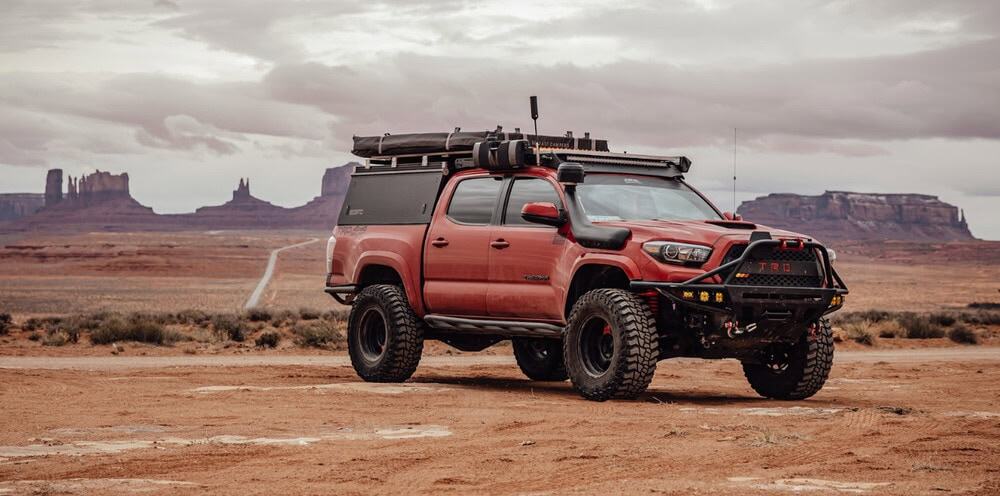
A Tacoma with a lift and stock upper control arms usually tells on itself fast. You feel it in vague steering, limited droop, uneven tire wear, or that nagging sense the front end is working harder than it should. If you're shopping for the best upper control arms for Tacoma, you're not really buying a cosmetic upgrade - you're correcting geometry, reclaiming articulation, and building a front suspension
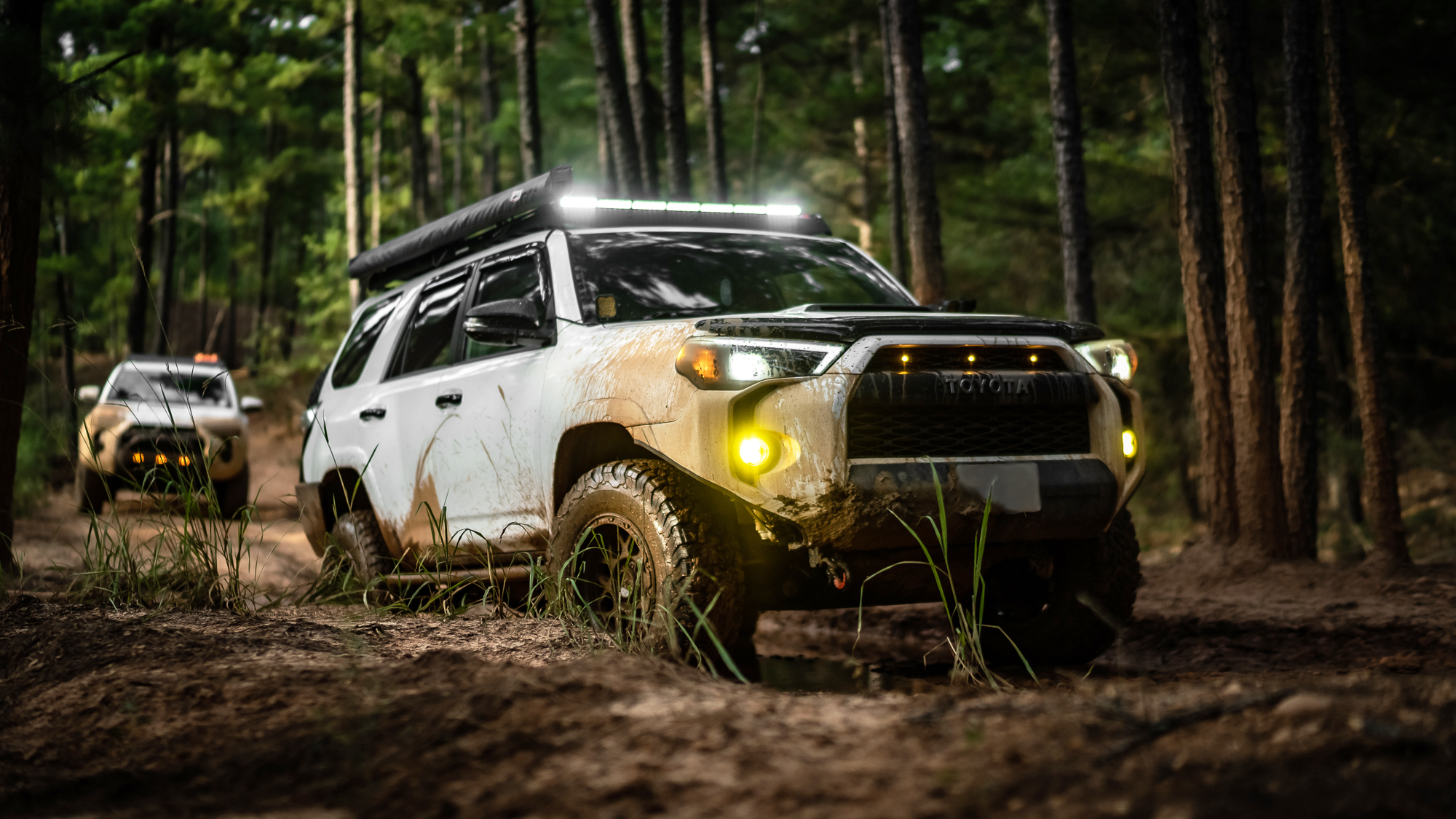
Lift a 4Runner an inch or two and the factory front end starts showing its limits fast. Alignment gets tighter, droop gets shorter, and the stock ball joint angle can end up working harder than Toyota ever intended. That is exactly why a 4Runner upper control arm upgrade becomes more than a cosmetic add-on - it is one of the parts that decides whether your lifted rig drives tight and tracks straight